
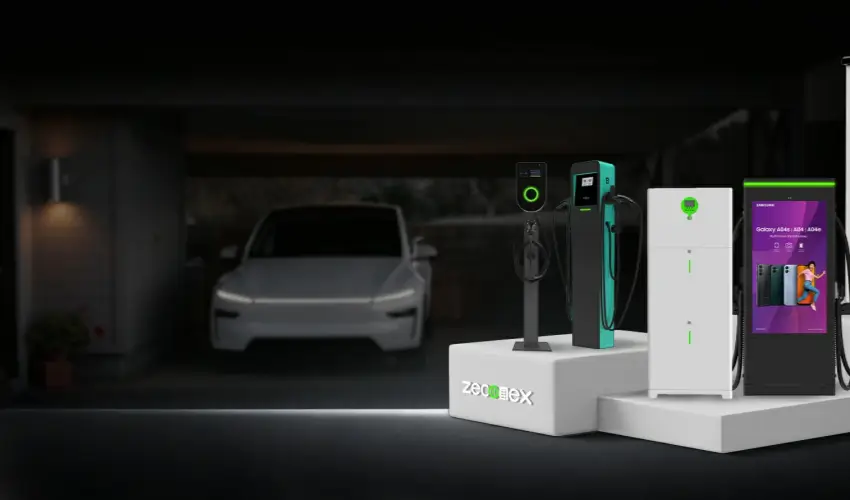
As the world accelerates toward electrification, an increasing number of companies are deploying electric vehicle (EV) charging stations. From employee commuting to fleet logistics and commercial support services, EV chargers have become a critical component of corporate infrastructure.
However, challenges arise:
With a wide variety of charging solutions on the market, how can companies determine which option best suits their needs?
With 14 years of deep industry expertise, ZECONEX explores this topic from the perspectives of charger types, application scenarios, costs, and future trends, helping businesses make more informed decisions.
Why are more and more companies deploying charging stations?
Companies typically invest in EV charging infrastructure driven by several key factors:
- Electrification trend: An increasing number of employees and customers are using electric vehicles.
- Policy and ESG requirements: Carbon neutrality and green operations have become central to corporate development.
- Enhancing asset value: Charging facilities are becoming standard amenities in commercial real estate.
- Long-term cost optimization: Compared to fossil fuels, electrification can reduce operational expenses.

What are the main types of EV charging stations?
Currently, the mainstream EV charging solutions on the market can be broadly categorized into three types:
1. AC Charger
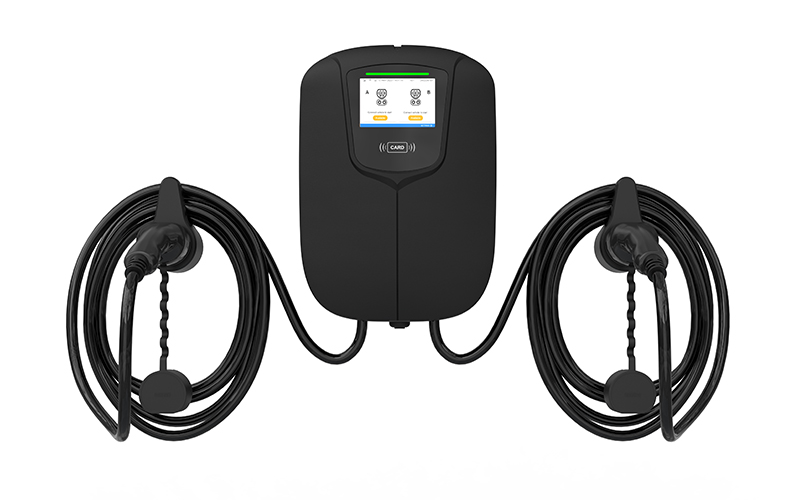
Advantages:
Low investment cost: Equipment and installation expenses are relatively low, usually without the need for complex power distribution upgrades.
Minimal grid requirements: Lower power output (typically 3.5 kW–22 kW) reduces impact on the electrical distribution system.
Ideal for long-duration parking: Suitable for employee parking lots, office campuses, or overnight charging scenarios.
Disadvantages:
Slower charging speed: Typically takes several hours to fully charge, depending on the vehicle’s onboard charger capacity.
Limited commercial potential: Long charging times and low turnover make it difficult to support high-frequency usage or revenue-driven operations.
Insufficient for immediate top-up: Cannot meet the fast-charging needs of time-sensitive users.
2. DC Fast Charger
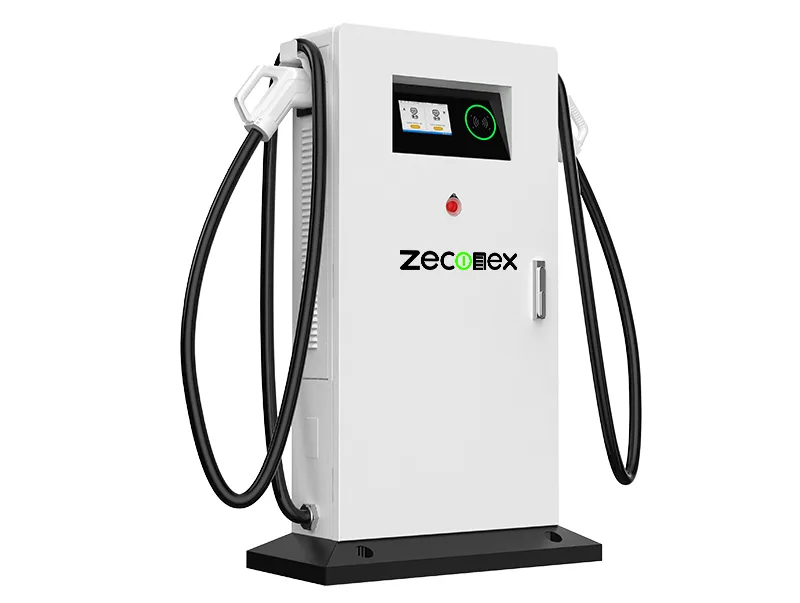
Advantages:
- High charging efficiency: Typically replenishes up to ~80% of battery capacity within 15–30 minutes.
- Supports high turnover operations: High-power output shortens single-vehicle charging time, improving station utilization and revenue potential.
- Enhanced user experience: Meets the fast-charging needs of time-sensitive users.
Disadvantages:
- Higher upfront investment: Equipment costs are high and may require additional expenses for power distribution upgrades and civil works.
- High grid capacity requirements: Requires high-power electrical access, potentially involving distribution expansion or high-voltage connections.
- Operational complexity: Requires a charging management system, load scheduling, and professional maintenance capabilities.
3. Battery-Integrated Charging Station
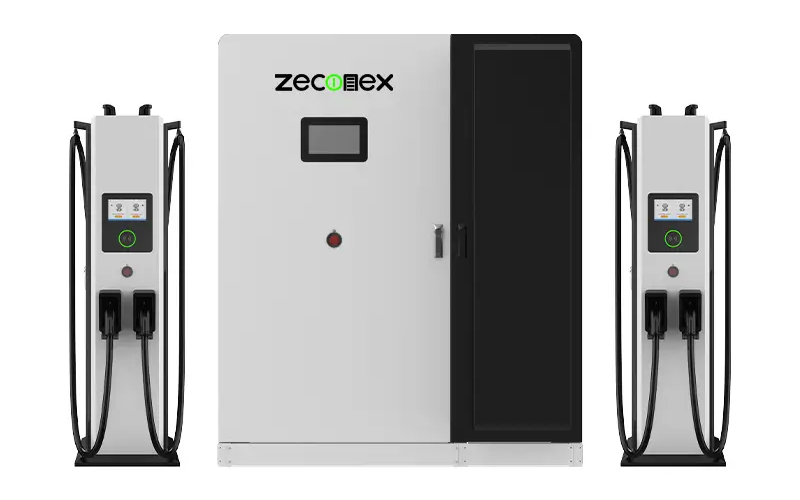
Advantages:
- Flexible deployment: Supports grid-tied, off-grid, or microgrid modes, suitable for areas with limited grid capacity or no grid access.
- Optimized electricity costs: Peak-shaving and valley-filling strategies reduce overall electricity expenses, depending on pricing mechanisms and scheduling strategies.
- Enhanced system stability: Energy storage buffers load fluctuations, helping manage grid instability, capacity limits, or peak demand.
- Supports energy management: Can be integrated with PV systems and Energy Management Systems (EMS), aligning with distributed energy trends.
Disadvantages:
- High initial investment: Batteries, PCS, and energy management systems increase overall project cost.
- High system complexity: Involves BMS, EMS, and thermal management systems, requiring advanced technical and operational expertise.
- Longer payback period: ROI is influenced by utilization rate, electricity pricing structure, and operational strategy.
4. EV Charging Station Comparison
Charger Type | Cost | Charging Speed | Grid Dependency | Suitable Scenarios |
|---|---|---|---|---|
Low | Slow | Low | Offices, employee parking | |
High | Fast | High | Commercial use, fleet operations | |
Relatively High | Fast | Low | Industrial parks, areas with limited grid capacity |
3 Key Factors for Companies When Selecting an EV Charging Station
1. Charging Demand & Use Case
Clearly defining your charging needs and usage scenarios is the foundation for selecting the right solution.
For internal scenarios such as employee parking lots, office campuses, or factories, where vehicles remain parked for extended periods, low-cost, stable charging should be the focus, making AC chargers the preferred choice.
For commercial scenarios such as shopping malls, highway service areas, or public-facing operations, where users stay for a short time and high turnover is required, high-power DC fast chargers should be prioritized to improve charging efficiency and enhance the user experience.
2. Power Capacity & Infrastructure
Companies must evaluate the site’s electrical capacity and infrastructure capabilities, as these are critical to project feasibility.
DC fast chargers, in particular, have high power requirements, necessitating a thorough load assessment and capacity planning before implementation.
If the existing grid capacity is insufficient, upgrades such as distribution expansion, transformer enhancements, or even high-voltage connections (e.g., 10 kV) may be required. These measures can significantly increase initial investment costs, construction complexity, and project timelines.
3. ROI & Business Model
The project should also be evaluated from a commercial perspective, focusing on return on investment (ROI) and operational model.
If the charging station is solely for internal employee use, its value lies primarily in enhancing employee benefits and strengthening corporate image, making it a cost-driven investment.
If the station is open to public use, emphasis should be placed on utilization rates, electricity pricing structures, and charging strategies, ensuring sustainable revenue through proper pricing and efficient operations.
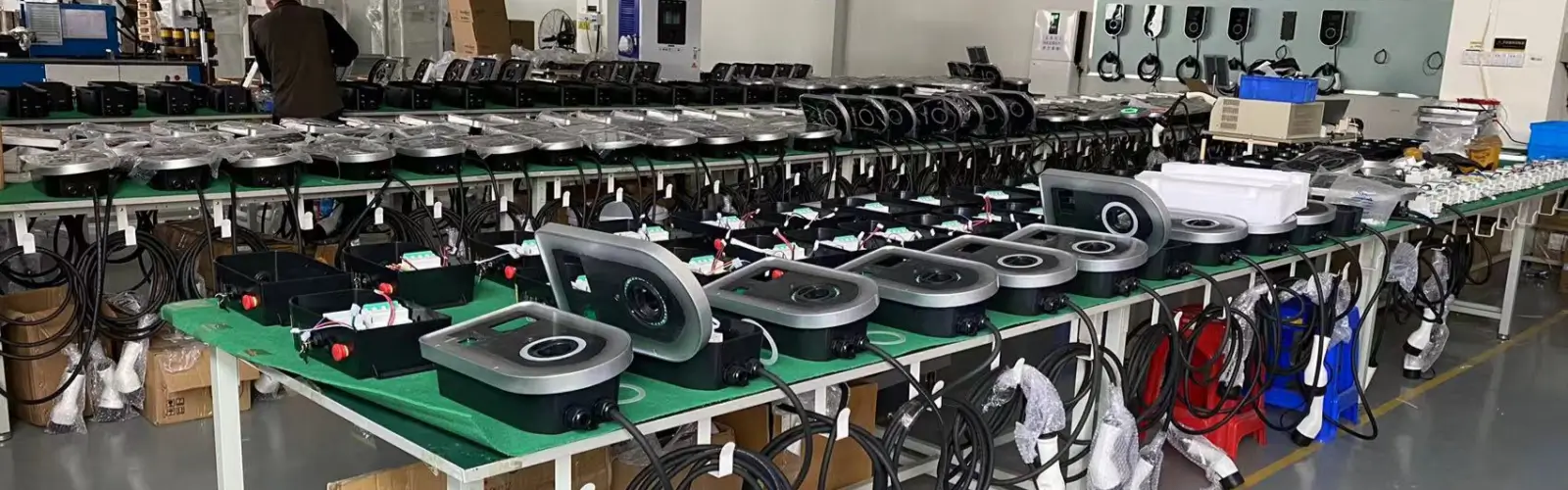
Optimal Charging Solution for Enterprises
Recommended Configuration (for medium to large-scale enterprise projects): AC Slow Charging + DC Fast Charging + Optional Energy Storage System
For medium to large-scale enterprise projects, a combined solution of AC slow charging, DC fast charging, and optionally an energy storage system is typically recommended. This approach balances cost control, charging efficiency, and system scalability.
In this configuration, AC charging forms the foundation, while DC fast charging supplements efficiency:
- AC chargers generally account for 60%–80% of the total, providing stable, everyday charging.
- DC fast chargers typically make up 20%–40%, handling peak periods and high-frequency usage scenarios.
(The exact proportion should be dynamically adjusted based on fleet size, charging frequency, and load conditions.)
The energy storage system adds value in scenarios such as:
- Significant peak-to-valley electricity price differences, enabling peak-shaving and cost optimization.
- Limited site power capacity helps relieve distribution pressure.
- Higher requirements for power stability or energy management.
Overall design philosophy:
- AC ensures baseline coverage.
- DC enhances turnover efficiency.
- Energy storage optimizes energy usage.
This strategy allows enterprises to control initial investment while achieving better operational efficiency and long-term returns.
Flexible adjustment based on use case:
- For internal scenarios dominated by employee vehicles, the AC proportion can be increased.
- For public-facing or high-frequency use scenarios, the DC proportion should be higher, and the necessity of an energy storage system should be evaluated.
Common Mistakes Companies Make When Selecting EV Charging Stations
During the deployment of electric vehicle (EV) charging stations in enterprises, many decisions are not technical issues but cognitive biases. These mistakes often lead to wasted investment, low utilization, or even project failure.
The following are the most common pitfalls companies encounter during the selection process:
Focusing only on the equipment price, ignoring the total cost
Blindly pursuing high-power fast charging
Ignoring actual use scenarios
Overlooking power capacity and infrastructure limits
Neglecting ongoing operation and management systems
Premature or indiscriminate deployment of energy storage systems
Top 5 Core Trends in EV Charging for the Future

Trend 1: Shift from Slow Charging to High-Power Fast Charging
Demand for DC fast chargers (150 kW+) is growing rapidly, with ultra-fast charging gradually being deployed. Commercial scenarios increasingly rely on high turnover capabilities.
Essence: Charging is evolving from a “replenishment tool” to an “efficiency tool.”
Impact: Higher upfront investment, but turnover and revenue increase accordingly.
Trend 2: Charging Stations Evolve into Energy Management Systems
Increasing grid pressure makes energy storage a core configuration. Peak-shaving, valley-filling, and electricity price arbitrage become key revenue mechanisms. V2G (Vehicle-to-Grid) is beginning to take hold.
Essence: Charging stations are transitioning from “electricity-consuming devices” to “energy dispatch nodes.”
Impact: Energy storage capacity directly determines competitiveness.
Trend 3: Intelligent Operations Become a Core Competency
The industry is moving from selling equipment to offering a combination of hardware + software + operations. Data analytics, AI maintenance, and dynamic pricing improve profitability.
Essence: Competition is shifting from “equipment” to “data and operations.”
Impact: Operational capability determines profitability.
Trend 4: Explosion of Enterprise and Fleet Markets
Commercial vehicles and electric logistics are driving growth in B2B demand. Enterprise campuses and fleet charging are becoming key battlegrounds.
Essence: The focus is shifting from “serving individuals” to “serving enterprise operations.”
Impact: Demand for high-power, customized solutions is increasing.
Trend 5: From Quantity to Reliability and User Experience
The industry is entering a stage of refinement; users increasingly care about availability, stability, and overall experience.
Essence: The focus is shifting from “building more” to “using well.”
Impact: Operational capability and user experience become core competitive differentiators.
Summary: Which Charging Solution Is Right for Your Enterprise?
If you are still unsure which solution to choose, you can make a quick decision based on actual use scenarios:
Primarily employee commuting: Focus on AC charging with a small proportion of DC chargers to control costs, ensuring daily top-up needs are met.
Mixed use (employees + visitors): Use a combination of AC + DC chargers to balance cost and charging efficiency.
High-frequency or commercial operations: Increase the proportion of DC fast chargers to improve parking turnover and operational revenue. If grid capacity is limited or electricity prices are high, consider adding an energy storage system to optimize energy usage and reduce long-term operating costs.
Alternatively, contact ZECONEX. Based on your project conditions, including power availability, fleet size, and usage patterns, ZECONEX can provide customized charging station solutions and ROI analysis, helping you achieve the optimal balance between cost and return.
FAQ
1. How Much Does It Cost for a Company to Install an EV Charging Station?
Typical project budget references:
Small-scale project (2–4 AC chargers): $15,000 – $50,000
Medium-scale project (multiple AC + a few DC chargers): $200,000 – $600,000+
Commercial fast-charging station (DC only): $250,000 – $1,000,000+
2. Do Companies Need to Apply for Additional Power When Installing EV Charging Stations?
In most cases, it is necessary to assess the existing electrical capacity to determine whether additional power or grid upgrades are required. This depends on the charging station’s power level and intended use.
For low-power AC charging (e.g., employee parking lots or long-duration top-up scenarios), if the existing distribution capacity is sufficient, deployment can usually proceed without additional upgrades.
For high-power DC fast charging or commercial-grade stations, due to higher power demands, companies often need to apply for increased electrical capacity, which may involve transformer upgrades or high-voltage connections.
Enterprises should conduct a power capacity assessment early in the project to determine whether expansion is needed and to estimate related costs.
3. How Long Does It Take to Recoup the Investment?
For most enterprise charging stations, the payback period ranges from 2 to 5 years, depending on factors such as utilization rate, pricing model, and electricity costs.