
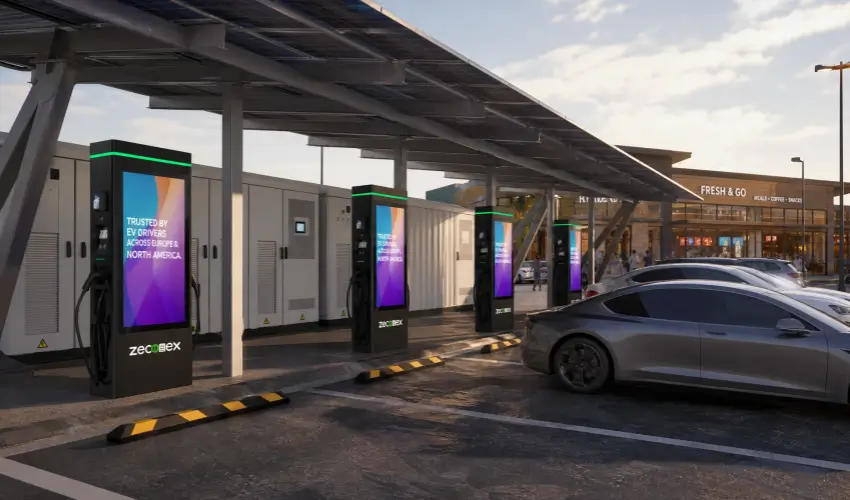
In 2026, EV charging infrastructure has moved beyond pilot projects and sustainability checkboxes. With global EV adoption accelerating, EV Charging Station ROI has become the decisive metric for investors, Charge Point Operators (CPOs), fleet managers, retailers, and energy companies. Payback periods for well-designed sites now range from 2–5 years in high-utilization locations, but many projects still struggle due to high upfront CAPEX, grid constraints, and suboptimal utilization.
Successful operators treat charging stations as integrated energy assets rather than isolated hardware installations. They combine smart power management, diversified revenue streams, and scalable designs to achieve stronger returns. This article examines what top performers do differently, the key factors driving (or destroying) profitability, and proven strategies—supported by real-world data and solutions that align with commercial realities.
What Successful Charging Investors Are Doing Differently in 2026
Leading investors in 2026 share several traits:
- Site selection driven by data: They prioritize high-traffic locations near amenities, leveraging traffic patterns, EV density, and dwell-time potential rather than generic highway placements.
- Hybrid revenue models: Beyond per-kWh fees, they capture advertising, retail uplift (EV drivers spend 20-30% more), fleet contracts, and grid services (e.g., demand response via storage).
- Phased, modular deployment: They avoid overbuilding upfront and use scalable systems to match growing demand.
- Energy optimization focus: Integration of battery storage or solar reduces grid upgrade costs and peak demand charges, which often erode margins.
- Platform integration: OCPP-compliant systems with robust backend analytics enable remote management, dynamic pricing, and high uptime.
These approaches shift the focus from raw utilization to profitable utilization—maximizing revenue per kWh while minimizing OPEX.
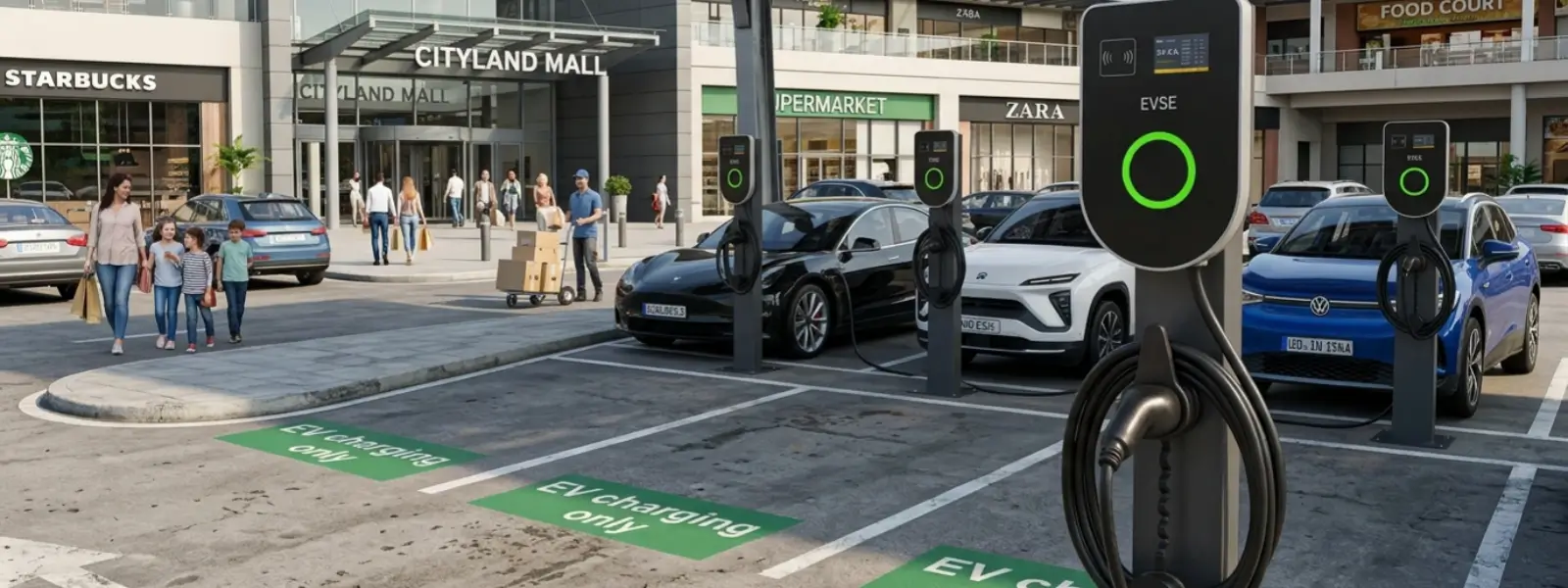
The Biggest Factors Affecting EV Charging Station ROI
1. Charger Utilization Rate
Utilization is the single biggest driver of profitability. Industry benchmarks suggest 15%+ utilization for DC fast chargers often marks the break-even point, with stronger sites reaching 20-30% or higher in prime locations.
Low utilization kills ROI through idle assets and high fixed costs. Why it matters more than price: Even modest pricing at high throughput generates far better returns than premium rates on empty stalls. Dynamic load balancing and multi-use designs (e.g., shared AC/DC or fleet + public) directly boost this metric.
2. Grid Capacity and Connection Costs
Grid upgrades represent one of the largest and most unpredictable CAPEX items. Demand charges and capacity constraints can delay projects or inflate costs dramatically.
Battery-integrated or hybrid systems mitigate this by enabling peak shaving, load balancing, and even off-grid operation in some cases, preserving margins and accelerating deployment.
3. Initial Investment (CAPEX)
Hardware, installation, permitting, and electrical work add up quickly. Modular and split-type designs lower entry barriers by allowing staged investment. Liquid-cooled high-power systems offer efficiency gains that reduce long-term energy losses.
4. Scalability and Future-Proofing
Overbuilding leads to stranded assets; underbuilding requires costly retrofits. Flexible, upgradable architectures (e.g., modular power modules or expandable satellite systems) protect against demand variability.
5. Equipment Reliability and Uptime
Downtime directly translates to lost revenue. High-reliability systems with remote diagnostics, predictive maintenance, and strong thermal management minimize outages and support higher utilization.
6. Energy Management Capabilities
Smart platforms that integrate storage, renewables, and dynamic allocation reduce electricity costs (often the largest OPEX component) and open ancillary revenue from grid services. Battery Energy Storage Systems (BESS) paired with chargers excel here by storing low-cost/off-peak energy and discharging during peaks.
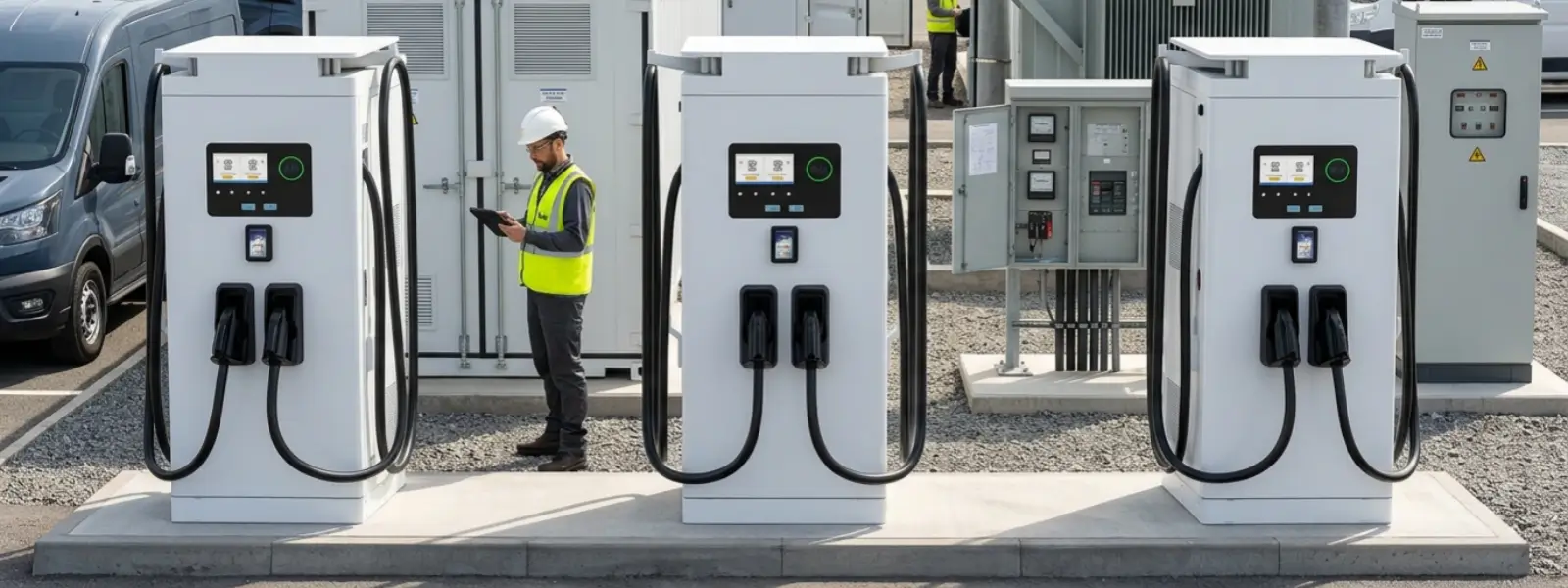
Proven Strategies to Improve Charging Station ROI
- Optimize Utilization: Use data analytics for site selection and dynamic pricing. Implement dynamic load balancing to serve more vehicles on the same grid connection. Promote via apps, roaming networks, and partnerships.
- Reduce Energy Costs: Deploy battery-integrated solutions for peak shaving and arbitrage. Solar + storage hybrids further lower costs and enhance ESG credentials for incentives.
- Diversify Revenue: Add advertising screens on chargers, partner with retailers for dwell-time uplift, secure fleet contracts, and participate in V2G or demand-response programs.
- Minimize CAPEX/OPEX: Choose modular, scalable hardware. Leverage incentives (federal/state rebates remain powerful in many markets). Prioritize systems with low maintenance and high efficiency.
- Leverage Smart Software: OCPP platforms with remote monitoring, OTA updates, and user-friendly apps improve uptime, user satisfaction, and operational efficiency.
How ZECONEX Helps Maximize Charging Station ROI
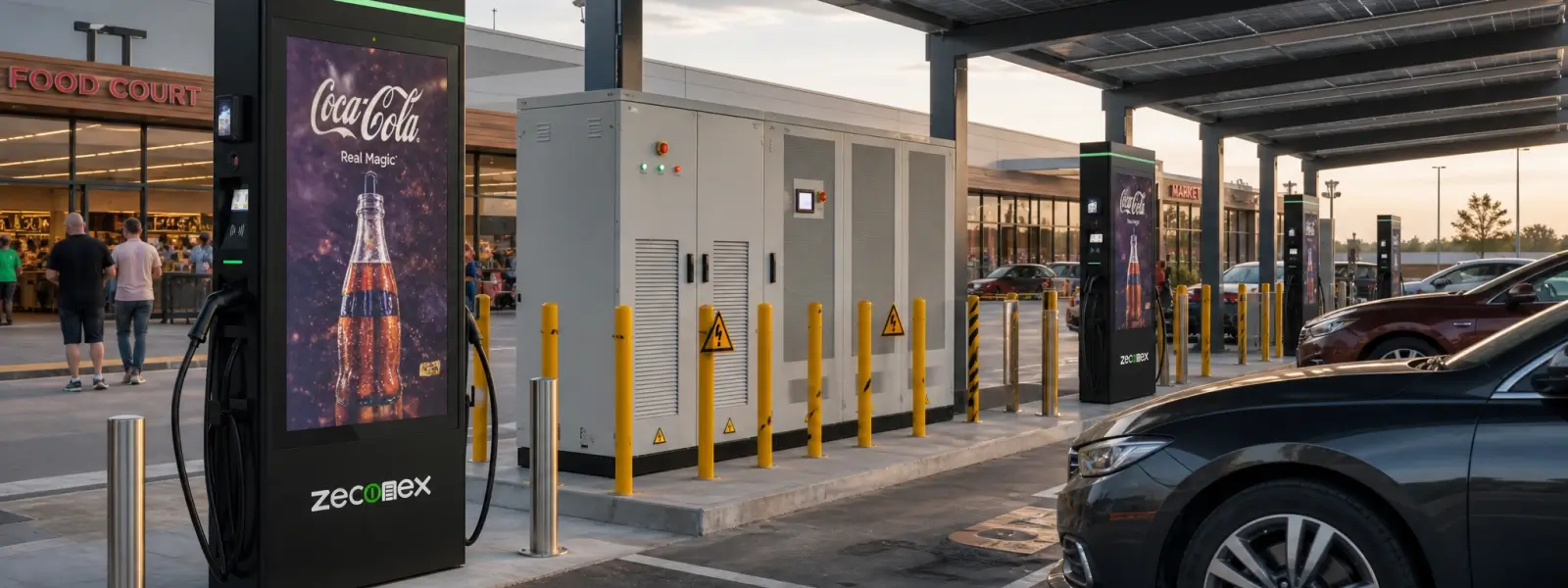
ZECONEX offers practical, deployable solutions tailored to the challenges above. Their portfolio emphasizes modularity, integration, and commercial viability—key for operators seeking faster payback without excessive risk.
- Battery-Integrated and BESS Charging Stations: These address grid constraints head-on by buffering power, enabling faster deployment on limited connections, and supporting peak shaving. This directly cuts demand charges and grid upgrade needs while improving reliability for higher utilization.
- Split-Type Modular and High-Power DC Fast Chargers: Modular designs allow phased expansion—start with core capacity and add modules as demand grows. Liquid-cooled options support sustained high-power delivery with better efficiency and lower long-term costs.
- Commercial AC Wallboxes and Advertising Chargers: Dual-port or multi-use configurations (including e-bike compatibility) maximize asset use. Advertising-integrated units create secondary revenue streams from digital displays, turning idle time into income.
- Satellite and Scalable Systems: Flexible architectures support fleet, retail, and public applications with OCPP-compliant cloud management for remote oversight, load balancing, and data-driven optimization.
- Full Ecosystem Support: From portable/home solutions to commercial DC, paired with energy management features, these reduce total ownership costs and enable integrated solar/storage deployments.
Operators using such integrated approaches report accelerated ROI through lower CAPEX per effective kW, reduced OPEX, and diversified income—aligning hardware with real project economics rather than theoretical specs.
Conclusion
Improving EV charging station ROI in 2026 requires moving beyond hardware procurement to holistic system design. Focus on utilization, energy intelligence, scalability, and multi-revenue models separates high-performing assets from marginal ones. Battery integration, modularity, and smart platforms are no longer nice-to-haves—they are essential for navigating grid realities and capturing value in a maturing market.
Site hosts, CPOs, fleets, and developers who adopt these strategies position themselves for stronger returns amid continued EV growth. For tailored project modeling, site assessments, or solution configurations that match your specific load, location, and business goals, contact the ZECONEX team for a consultation. The right infrastructure partnership can turn charging stations from a cost center into a profitable, future-proof asset.
FAQ
1. How long does it take for an EV charging station to become profitable?
Most EV charging projects achieve payback within 2–8 years, depending on utilization, energy costs, and site conditions. Higher-utilization locations, combined with energy storage, smart energy management, and diversified revenue streams, typically deliver stronger ROI and faster returns.
2. What is a good utilization rate for a commercial EV charging station?
DC fast chargers: 15–20%+ is a common profitability threshold (roughly 4–6+ hours/day average use). National averages hover around 15–18%, with top sites exceeding 30%.
Level 2 (AC) chargers: Higher utilization possible (20–40%+) in destination locations like workplaces, malls, or fleets due to longer dwell times.
Benchmark for success: Aim for 20%+ overall. Below 10–15% often leads to losses due to fixed costs. Dynamic load balancing and multi-use (public + fleet) designs boost this significantly.
3. Can EV charging stations generate revenue beyond charging fees?
Yes — diversified revenue is key to strong ROI:
- Advertising on screens/displays (especially ad-integrated chargers).
- Retail uplift: EV drivers spend 20–30% more at host sites (hotels, malls, stores).
- Fleet contracts: Predictable, high-volume agreements.
- Grid services: Demand response, frequency regulation via BESS.
- Subscriptions, premium fast charging, or partnerships (roaming networks).
- Data/monetization from platform analytics.
- Advertising EV chargers and integrated platforms turn idle time into income.