
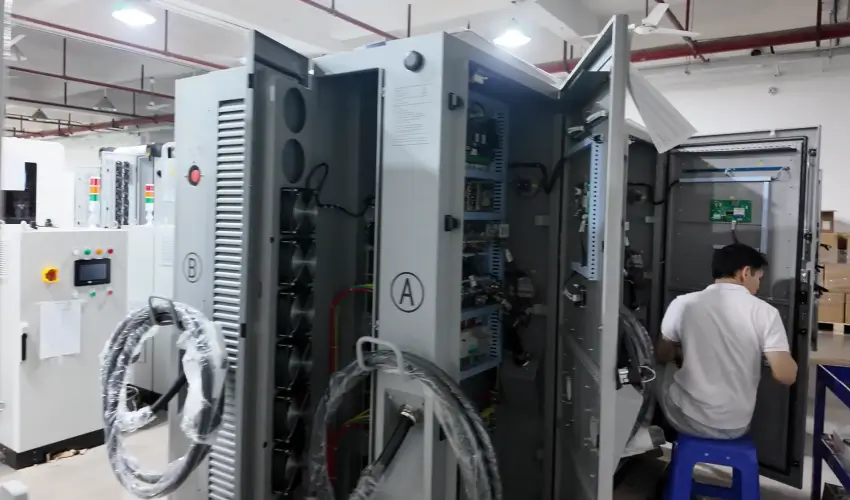
The EV charging market has moved past the early hype. In 2026, buyers — whether CPOs, fleet operators, distributors, or project developers — face a more mature but still fragmented landscape. Deployment volumes are significant, yet profitability, grid integration, and long-term reliability have become the real bottlenecks.
Selecting the right EV Charger Manufacturer is no longer about finding the lowest price or the highest kW rating on paper. It’s about identifying a partner who can deliver hardware that works reliably in real-world commercial conditions, supports scalable software, and stands behind the project years after installation.
Why the EV Charger Market Is Changing in 2026
Ultra-fast charging (350 kW+) is becoming mainstream for corridors and high-turnover sites, while depot and destination charging emphasize smart energy management and interoperability. AI-driven load balancing, V2G capabilities, and tighter integration with renewable energy and storage are shifting from nice-to-have to expected features in larger projects.
Buyers are also more cautious after earlier waves of deployments. Many have experienced chargers that looked good in a showroom but failed to integrate with existing backends, struggled with local grid constraints, or became expensive paperweights when the supplier’s support dried up. The winners in 2026 will be those who solve the total cost of ownership (TCO), not just upfront CAPEX.
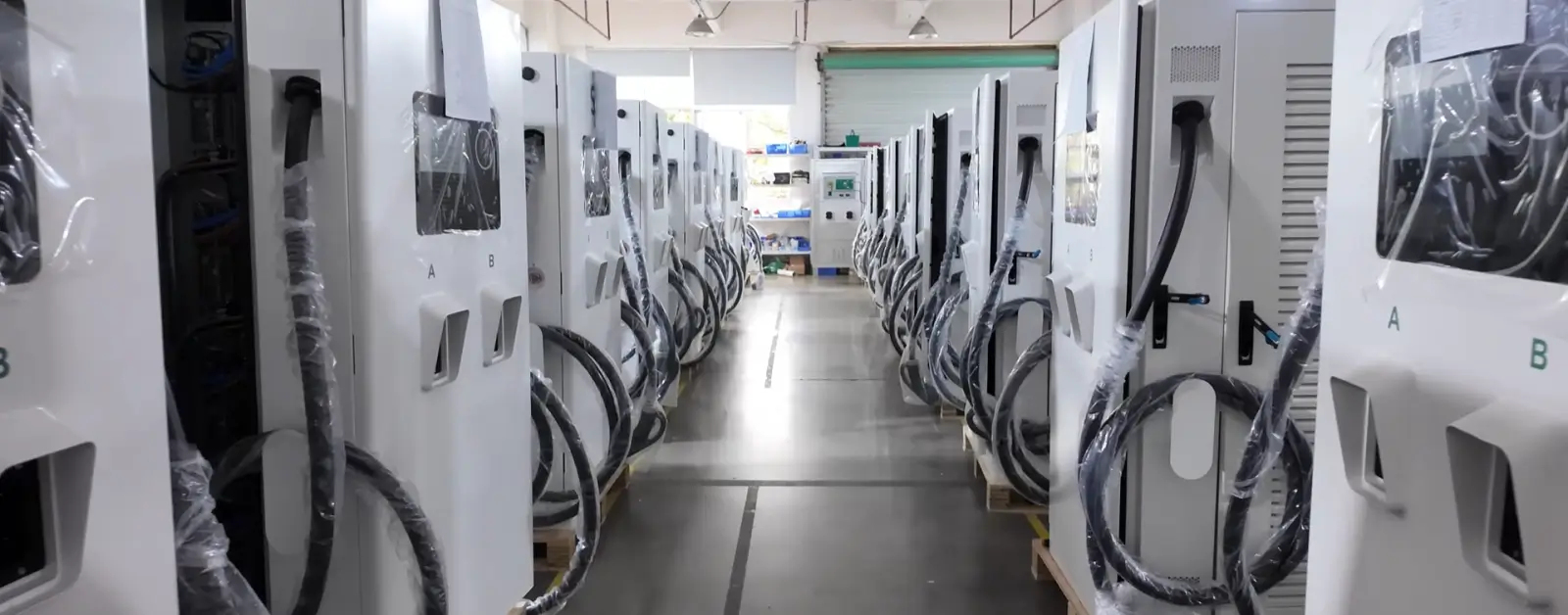
What Global Buyers Really Care About
Procurement teams evaluating EV Charging Station Manufacturers focus on a few hard questions:
- Can this scale across multiple sites and countries without constant custom engineering?
- Will the chargers talk to my chosen CSMS (Charging Station Management System) without expensive middleware?
- How will this installation interact with the local grid, especially under peak loads or with solar/storage?
- What happens when something breaks in year two or three?
- Can the supplier support my branding, certification needs, and evolving requirements?
Price still matters, but experienced buyers now weigh it against delivery reliability, technical flexibility, and post-sale support.
European & American Brands vs. Chinese Manufacturers
Western brands often bring mature software ecosystems, strong local service networks, and full suites of regional certifications. They command premium pricing that reflects brand trust and established channel support.
Chinese manufacturers, particularly those with deep vertical integration, deliver compelling cost advantages, faster iteration on hardware, and strong ODM capabilities. The best ones have closed the quality and software gaps significantly. Many now offer robust OCPP implementations, MID-certified metering, and project delivery experience across dozens of countries.
The gap has narrowed. The real differentiator is no longer geography but whether the supplier treats manufacturing as a core competency and invests seriously in software and long-term support.

What Makes a Reliable OEM/ODM EV Charger Factory
For companies seeking OEM EV Charger or white-label solutions, look beyond brochures. A capable factory should demonstrate:
- Multiple in-house production lines with a dedicated focus on AC, DC, and power modules.
- Strong R&D teams are experienced in international protocols (OCPP 1.6J/2.0.1 and beyond).
- Ability to support true customization — enclosure design, UI/branding, functional tweaks — without massive MOQs that kill smaller projects.
- Vertical control over key components (connectors, power electronics) for consistent quality and lead times.
- Proven export track record with thousands of units deployed globally.
Factories that also run their own cloud platform and app development tend to understand real operational challenges better than pure contract manufacturers.
Key Technologies Buyers Should Evaluate
Dynamic Load Balancing (DLB) has become essential for commercial sites. Good systems monitor building or site consumption in real time and adjust charger output to prevent overloads while maximizing EV uptime. Both static and dynamic variants matter depending on the installation.
Smart EV Charging Solutions extend beyond basic scheduling to include solar integration, peak shaving, and energy cost optimization. Look for suppliers who can provide or integrate with platforms that deliver these at the site level.
OCPP EV Charger compliance remains foundational. OCPP 1.6J is table stakes for most commercial deployments; forward-looking buyers are testing 2.0.1 for advanced features like better security and Plug & Charge support. Interoperability prevents vendor lock-in and simplifies multi-vendor fleets.
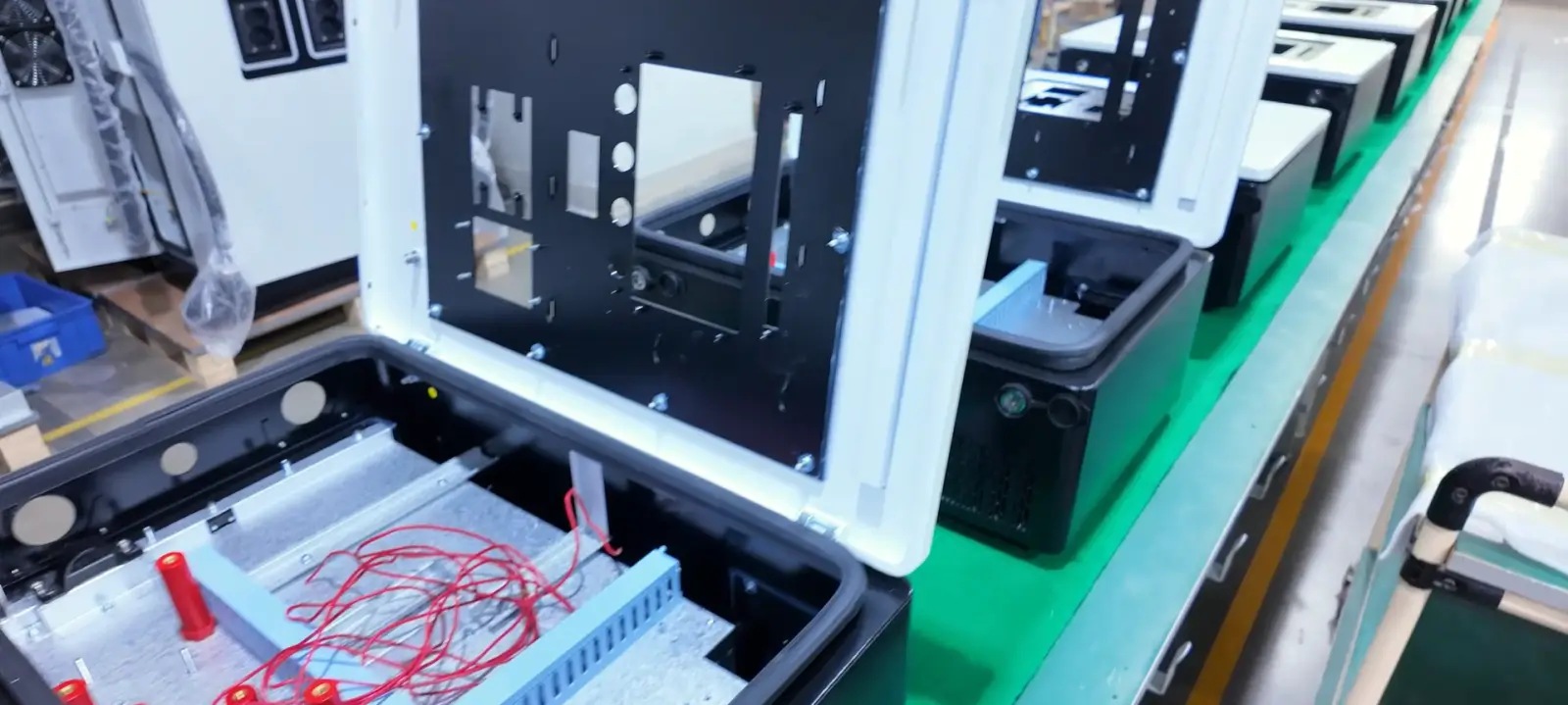
AC Charger vs DC Fast Charger Capabilities
AC wallboxes (7–22 kW, up to 44 kW dual) dominate home, workplace, and light commercial use. Key differentiators include load management, RFID/POS options, MID metering for billing, and robust RCD protection (Type A + 6mA DC).
DC Fast Charger Manufacturers face higher technical bars — liquid-cooled connectors, high-power modules, precise thermal management, and complex power electronics. Reliable suppliers offer modular designs for easier maintenance and scalability, from 20–40 kW minis up to 320–480+ kW systems.
The strongest partners offer both AC and DC lines with unified cloud management, simplifying operations for mixed installations.
How to Evaluate Engineering & Project Delivery Ability
Ask for:
- Detailed load calculation and distribution support.
- Experience with specific grid conditions in your target markets.
- References from similar-scale projects (not just unit sales).
- Remote monitoring, diagnostics, and firmware OTA capabilities.
- Spare parts strategy and RMA processes.
Suppliers who can discuss CT placement for DLB, transformer sizing, or cable management early in the conversation demonstrate project competence.
Certifications and Grid Compatibility
CE, RoHS, and relevant IEC standards are the baseline for Europe. North America demands UL/ETL or equivalent. Individual markets may require additional local approvals. Grid compatibility (voltage, frequency, THD, power factor) varies significantly — a supplier with real deployment experience in your region will already know the pitfalls.
MID-certified meters are increasingly important for public or billing-related installations.
Red Flags When Choosing an EV Charger Supplier
- Vague or inconsistent answers about OCPP implementation and testing.
- Over-promising on certifications that are “in process” without clear timelines.
- No transparent discussion of warranty, spare parts, or remote support.
- Refusal to provide detailed technical datasheets or third-party test reports.
- Heavy reliance on trading companies rather than direct factory engagement.
- Poor documentation or English-language support for international projects.
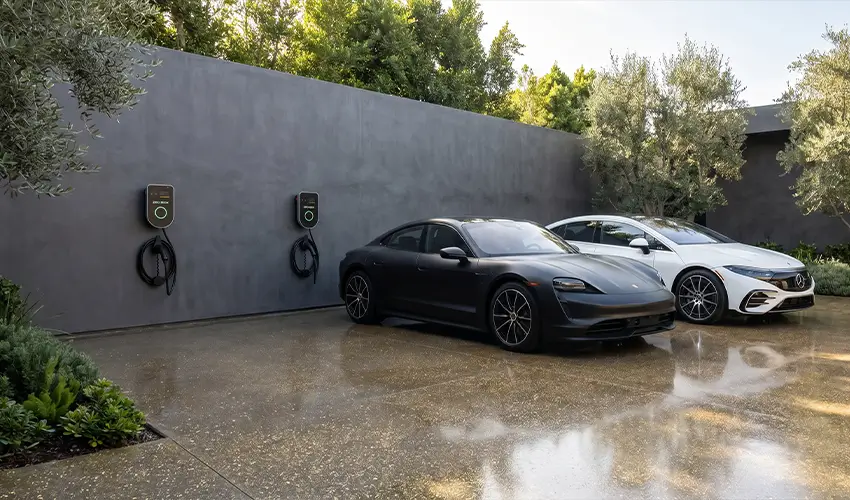
Choosing Your Long-Term Partner
In 2026, the best EV Charger Supplier is the one that reduces your operational risk and total cost while giving you flexibility to grow. Whether you need full OEM/ODM for your own brand, turnkey commercial solutions, or reliable volume supply for distribution, prioritize manufacturers who combine strong production scale with genuine software and project capabilities.
Zeconex exemplifies the modern engineering-focused Chinese manufacturer: in-house development of AC/DC chargers, portable units, power modules, and cloud/APP systems; broad OCPP support; attention to load balancing and safety features; and a track record serving global CPOs, fleets, and retailers. Like the strongest players, focus on delivering reliable, certifiable hardware backed by practical project experience rather than hype.
The market will continue consolidating around suppliers who can execute reliably at scale. Spend time on factory audits, technical deep-dives, and reference checks. The right partner won’t just sell you chargers — they’ll help you build a charging business that performs for years.
Ready to discuss your project requirements? Zeconex, the capable manufacturers welcome detailed conversations with serious buyers.