
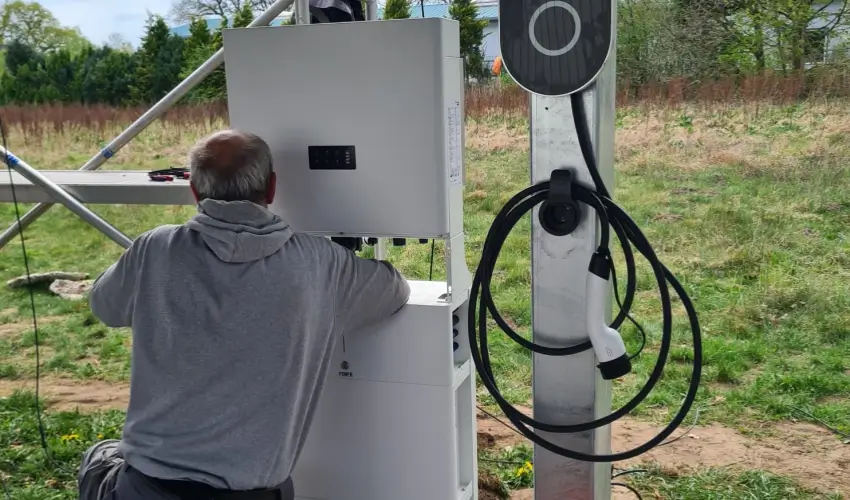
EV charging station installation costs often represent 40-70% of total project investment for commercial and fleet deployments.
In competitive markets across Europe and North America, controlling installation costs while maintaining safety, compliance, and scalability has become a core competency.
Successful operators focus on smarter planning, technology choices, and early collaboration with experienced manufacturers rather than simply seeking the lowest equipment price. This approach consistently delivers measurable savings without compromising performance.
This article shares practical, field-tested approaches drawn from real commercial EV charging deployments.
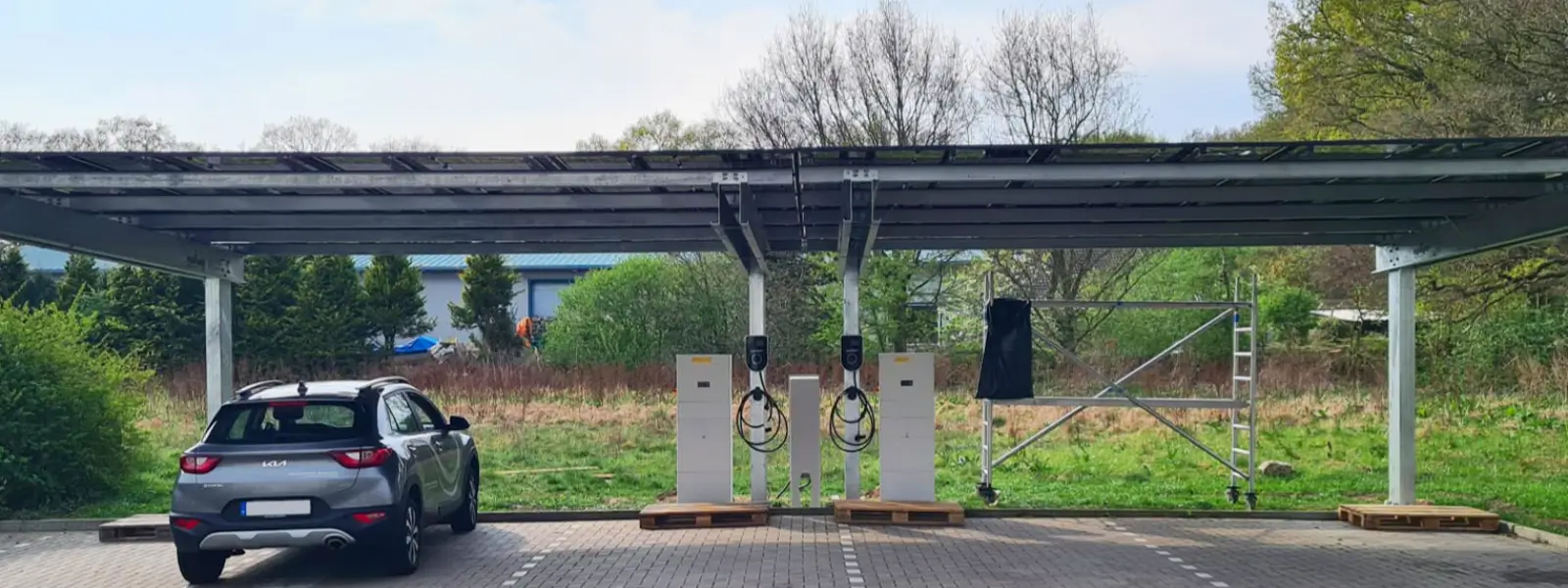
Understand What Drives EV Charging Installation Costs
Several major cost categories drive commercial EV charging station expenses:
Power Infrastructure Upgrades
Power infrastructure upgrades frequently dominate budgets. Upgrading transformers, switchgear, or main distribution panels for high-power DC fast chargers or multiple AC units can add tens or hundreds of thousands of dollars.
Civil Works and Cabling
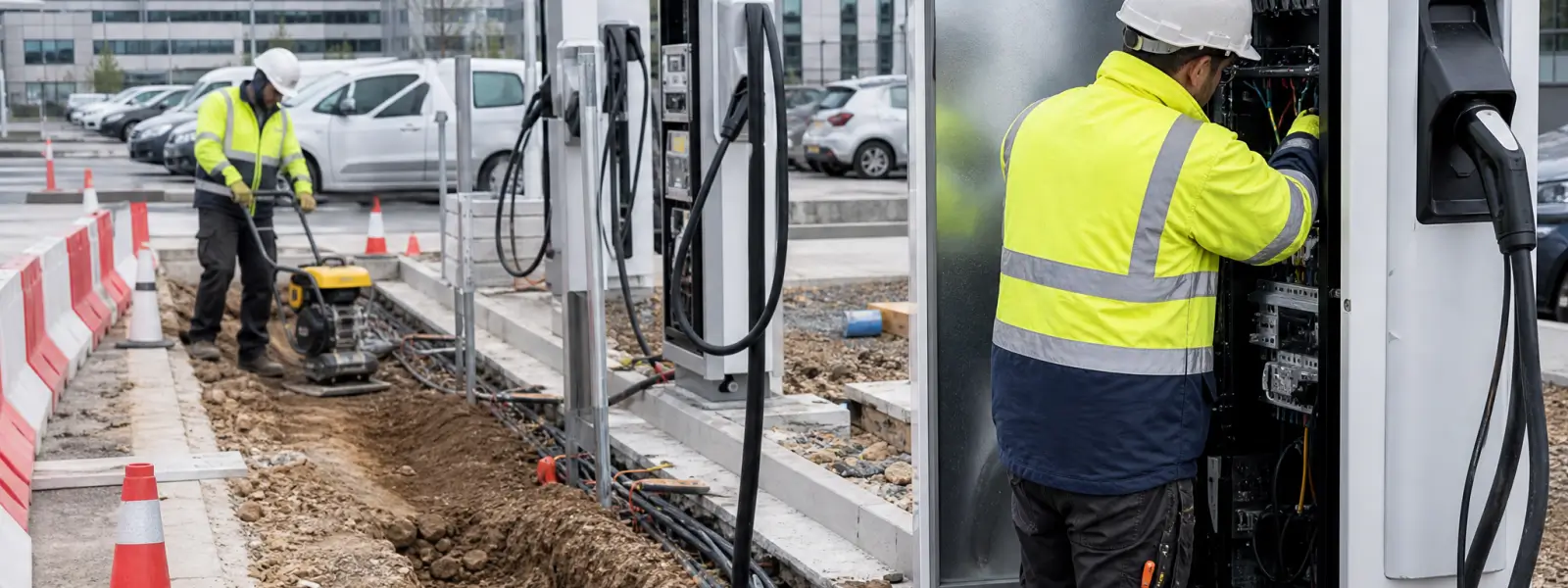
Civil works and cabling represent another large share. Trenching, conduit installation, and long cable runs from the main electrical room to charger locations increase both material and labor costs. In urban or retrofitted sites, these can become particularly expensive due to permitting and disruption.
Permitting, Inspections, and Compliance
Permitting, inspections, and compliance add administrative overhead and delays. Utility approvals, grid connection studies, and local electrical code compliance (including grounding and safety systems) vary significantly by jurisdiction.
Communication and Management Systems
Communication and management systems introduce additional expenses. Network infrastructure (fiber, Ethernet, or cellular), payment terminals, and backend integration platforms can compound costs if not integrated efficiently.
Testing, Commissioning, and Labor
Testing, commissioning, and labor round out the picture. On-site calibration, load testing, and coordination among multiple trades often extend timelines and inflate budgets.
7 Practical Ways to Reduce EV Charging Station Installation Costs
1. Conduct Site Assessment Before Equipment Selection
A thorough electrical load study and site survey before selecting chargers prevents over-engineering. Many projects assume maximum simultaneous load and oversize transformers or feeders unnecessarily.
Assess existing transformer capacity, peak demand patterns, and available headroom. Tools like CT monitoring during the survey phase reveal actual concurrent usage. This data-driven approach often avoids costly utility upgrades. For instance, sites with diverse loads (parking, retail, offices) frequently discover they can support more chargers than initially estimated through intelligent management rather than raw capacity increases.
Early assessment also informs optimal charger placement and cable routing, minimizing trenching distances.
2. Deploy Modular Charging Solutions
Modular systems allow phased deployment, matching infrastructure investment to actual demand growth. Instead of installing maximum capacity upfront, operators can begin with core power modules and expand by adding units as utilization increases.
This approach reduces initial civil works and electrical infrastructure scope. Zeconex-style modular DC chargers and scalable AC wallboxes exemplify this flexibility, supporting future expansion with minimal additional trenching or panel upgrades.
Operators report 20-30% lower initial CAPEX on phased projects while maintaining a clear upgrade path that avoids full system replacement later.
3. Optimize Charger Placement
Strategic layout dramatically reduces cabling costs. Centralizing chargers near existing electrical infrastructure or distribution points shortens cable runs and minimizes conduit requirements.
In parking facilities, grouping chargers in clusters rather than spreading them individually cuts trenching volume significantly. Vertical stacking or wall-mounted solutions in garages further optimize space and reduce foundation work compared to freestanding bollards.
Early collaboration with the equipment provider on layout drawings ensures the design accounts for real-world factors like vehicle maneuverability, accessibility, and future maintenance access.
4. Implement Dynamic Load Management
Dynamic Load Balancing (DLB) is one of the most effective tools for cost control. By monitoring real-time building or site consumption and intelligently allocating available power, DLB prevents overloads without requiring transformer upgrades.
Systems that integrate CT sensors and communicate via OCPP allow chargers to modulate output automatically—prioritizing critical loads while maximizing EV charging during off-peak periods.
In practice, DLB often enables operators to deploy 30-50% more charging points on the same electrical service. For commercial sites with variable demand (retail centers, offices, fleets), this feature transforms marginal electrical capacity into viable charging infrastructure.
5. Standardized Equipment Across Multiple Sites
Standardization delivers compounding savings. Using consistent charger models, communication protocols, and management platforms across a portfolio simplifies procurement, training, spare parts inventory, and maintenance.
Operators avoid the hidden costs of managing multiple vendors, incompatible software, and varied spare parts. A unified OCPP-compliant platform with remote monitoring reduces on-site troubleshooting visits.
Standardized installations also accelerate permitting and commissioning on subsequent sites, as documentation and approval processes become repeatable.
6. Choose Chargers with Integrated Functions
Modern commercial chargers with high levels of integration eliminate the need for multiple external components. Look for units that incorporate:
MID-certified energy meters for billing accuracy
Built-in OCPP 1.6J (upgradable to 2.0) for seamless backend integration
Dynamic load management capabilities
Multiple communication options (Ethernet, Wi-Fi, 4G)
Integrated RCD protection (Type A + 6mA DC)
RFID and app-based authentication
Integrated designs reduce external panel space, additional wiring, and separate hardware purchases. For example, wallbox or pedestal solutions with native cloud connectivity and payment options streamline deployment compared to basic units requiring extensive add-ons.
7. Partner with an Experienced Manufacturer Early
Early engagement with a knowledgeable manufacturer provides the greatest leverage for cost reduction. Experienced partners contribute detailed load calculations, cable sizing recommendations, layout optimizations, and compliance guidance tailored to specific markets.
They can identify opportunities for value engineering—such as recommending appropriate power levels, connector types, or cooling methods—that align with project requirements without excess. Technical support during the design phase prevents costly field modifications later.
Manufacturers with strong R&D and global deployment experience, such as those offering comprehensive AC/DC portfolios and cloud platforms, help operators efficiently navigate regional certification nuances (CE, MID, etc.).

Common Mistakes That Increase Installation Costs
Several recurring errors inflate budgets:
Over-designing power capacity based on theoretical maximums rather than measured data.
Poor site planning that results in excessively long cable runs or difficult access.
Ignoring future expansion during initial electrical design, leading to major rework.
Selecting incompatible or low-integration equipment that requires extensive customization.
Underestimating permitting timelines and utility coordination, causing schedule slippage and change orders.
Avoiding these through structured project planning and expert input protects margins.
Think Beyond Initial Cost: Focus on Total Cost of Ownership (TCO)
Smart operators evaluate Total Cost of Ownership rather than focusing solely on upfront installation expenses. A slightly higher initial equipment investment often yields substantial savings in operation, maintenance, and upgrades.
Consider equipment lifespan, warranty terms (typically 2-3 years, extendable), remote diagnostic capabilities, and ease of maintenance. Chargers with robust build quality, natural or efficient cooling, and strong after-sales support minimize downtime and service calls.
Energy efficiency, billing accuracy (via MID meters), and advanced features like dynamic load balancing directly improve revenue and reduce utility costs. Reliable remote monitoring and OTA updates further lower operational overhead.
A professional manufacturer’s support in commissioning, training, and ongoing optimization accelerates time-to-revenue and protects long-term ROI.
Conclusion
Reducing EV charging station installation costs requires a combination of thorough planning, smart technology choices, and strategic partnerships. By conducting proper site assessments, leveraging dynamic load management, optimizing layouts, standardizing equipment, and selecting highly integrated solutions, operators can achieve substantial savings while building reliable, future-proof infrastructure.
If you are planning a commercial EV charging project—whether a single site or multi-location portfolio—we invite you to connect with our team. Share your site details and requirements, and we’ll provide tailored technical recommendations and cost-optimization insights based on proven deployments.
Ready to optimize your next EV charging installation? Contact us today to discuss your project.