
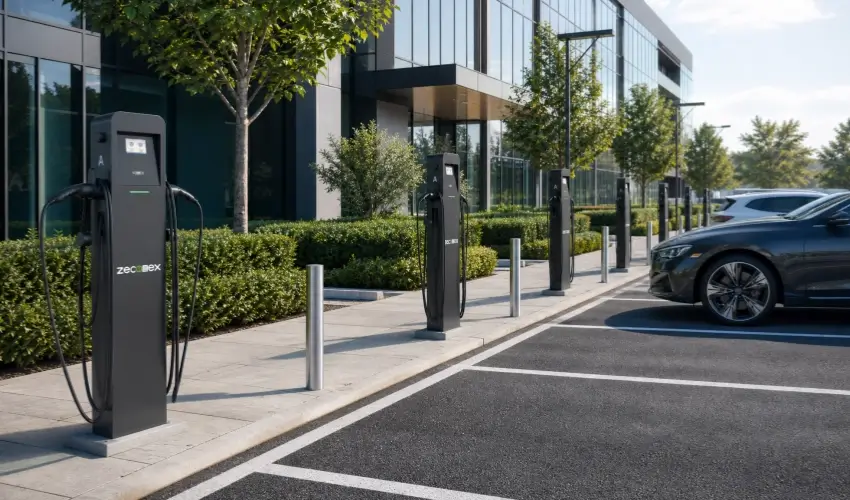
If you are planning a commercial EV charging project, you have probably asked yourself: “How can we serve more vehicles without doubling our parking footprint or electrical infrastructure costs?”
This is one of the key concerns for charging operators.
One of the most common misconceptions is that increasing charging capacity always means installing more single-connector units—and accepting higher civil works, more feeder cables, and longer payback periods.
However, ZECONEX Pedestal Dual-Connector EV Chargers provide a practical solution to the challenges of scaling commercial charging stations and controlling infrastructure costs. By increasing charging point utilization and improving the overall user experience, they create value for both operators and EV drivers.
Why Commercial Charging Projects Need Dual-Connector Solutions
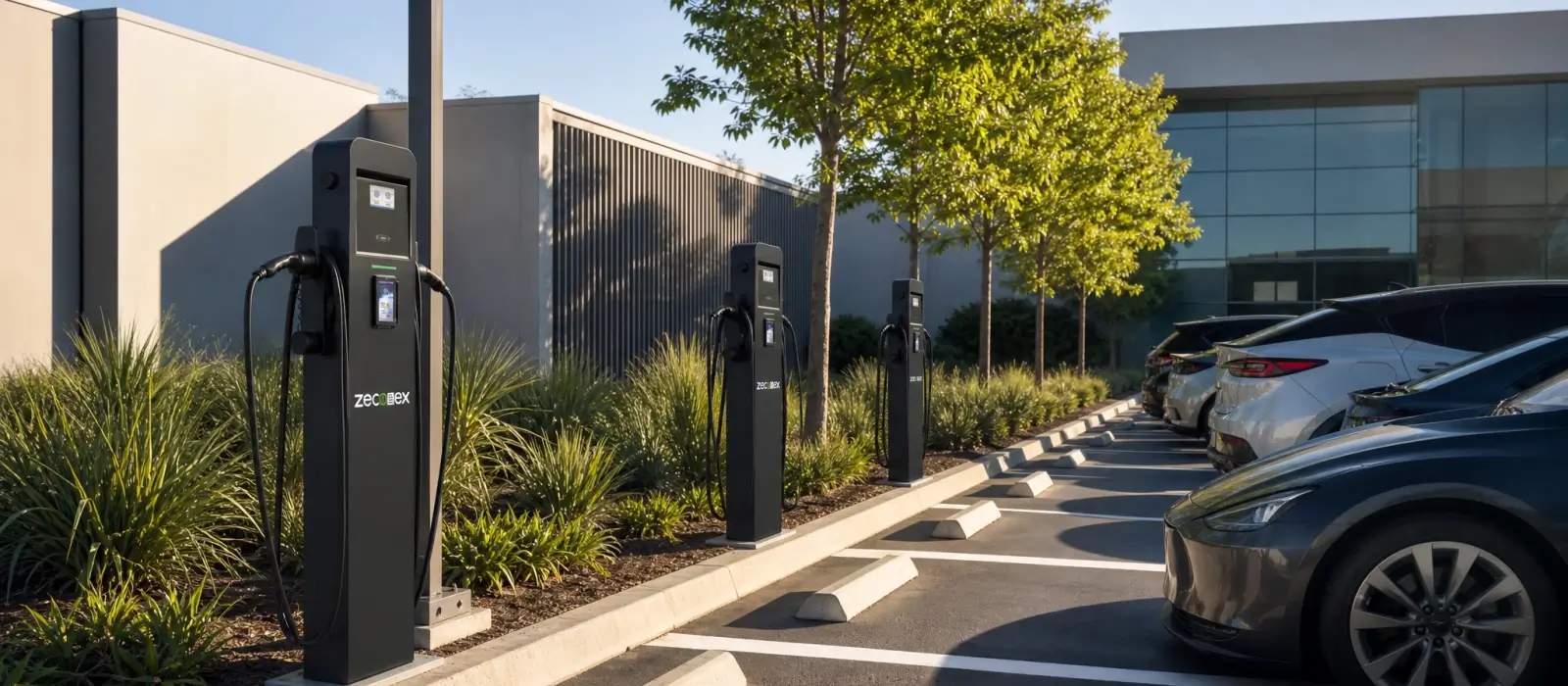
In high-demand locations such as office parks, retail centers, and fleet depots, the ability of one charger to serve two vehicles at the same time delivers clear operational value.
Comparison Aspect | Two Single-Connector Chargers | One Dual-Connector Charger | Typical Advantage for Operators |
Mounting points/poles | 2 | 1 | ~50% fewer foundations or wall brackets |
Feeder cable runs | 2 | 1 | Reduced cabling and trenching cost |
Protection devices (MCB/RCBO) | 2 sets | 1 set | Lower electrical panel complexity |
Parking bay footprint | 2 bays occupied by equipment | 1 bay for equipment | Higher vehicle density per area |
Concurrent charging capacity | 2 vehicles | 2 vehicles | Same capacity, half the hardware |
Typical utilization rate | Lower (one unit often idle) | Higher (second socket always ready) | Better ROI on installed capacity |
Key Advantages of ZECONEX Dual-Connector EV Charger
Higher Charging Efficiency for Multiple Vehicles
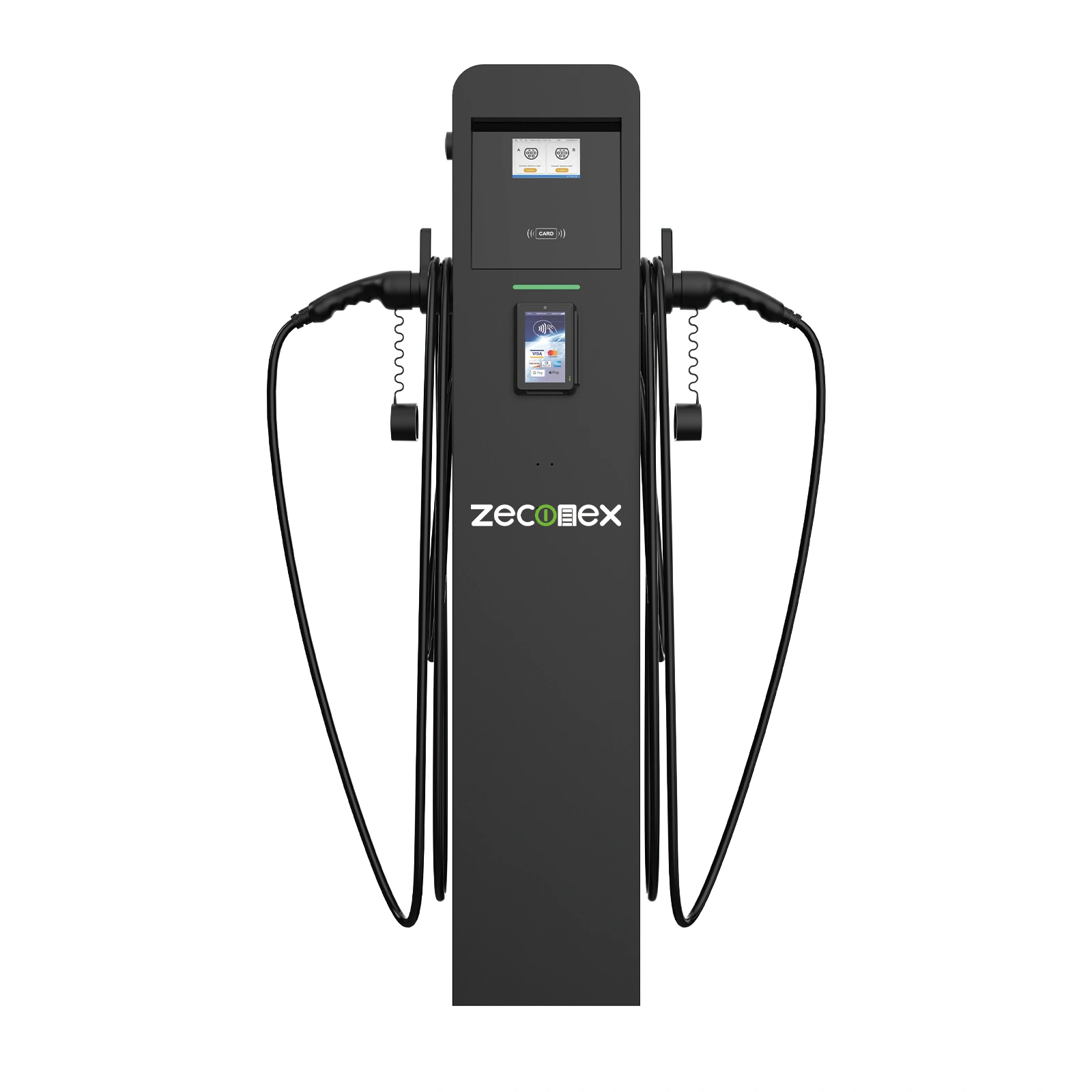
ZECONEX dual-connector models (Mix Series Business Wallbox) provide two Type 2 sockets that operate concurrently, delivering up to 22 kW or 44 kW total according to configuration. This doubles the number of vehicles that can be served from a given footprint and reduces queue times during peak periods. For fleet operators, the benefit is immediate: more vehicles return to service without expanding the physical charging area.
Optimized Installation Cost and Space Utilization
One dual-connector unit replaces two single-connector chargers, cutting the number of wall brackets, poles, cable runs, and protective devices in half. Electrical contractors face simpler load calculations and fewer penetrations. Compact dimensions (approximately 440–520 mm wide) and wall- or pole-mount options allow installation in constrained commercial parking layouts, office garages, and depot yards.
Reliable Performance for Commercial Applications
The enclosure is rated IP55 and IK08, suitable for outdoor installation across –30 °C to +55 °C. Integrated residual-current monitoring (Type A + 6 mA DC), over-current protection, and MID-certified energy meters meet the safety and metering requirements of public or semi-public use. Robust construction and dual cylinder locks support long-term commercial operation with minimal unplanned downtime.
Smart Management and Easy Integration
OCPP 1.6-J (optional 2.0) enables connection to existing central management systems. Ethernet, Wi-Fi, and optional 4G interfaces support remote monitoring, firmware updates, and coordinated load management across multiple units. RFID authentication and a 5-inch touchscreen provide local control while the backend handles utilization data and billing records—making integration into larger commercial networks straightforward.
Ideal Applications of Dual-Connector EV Chargers
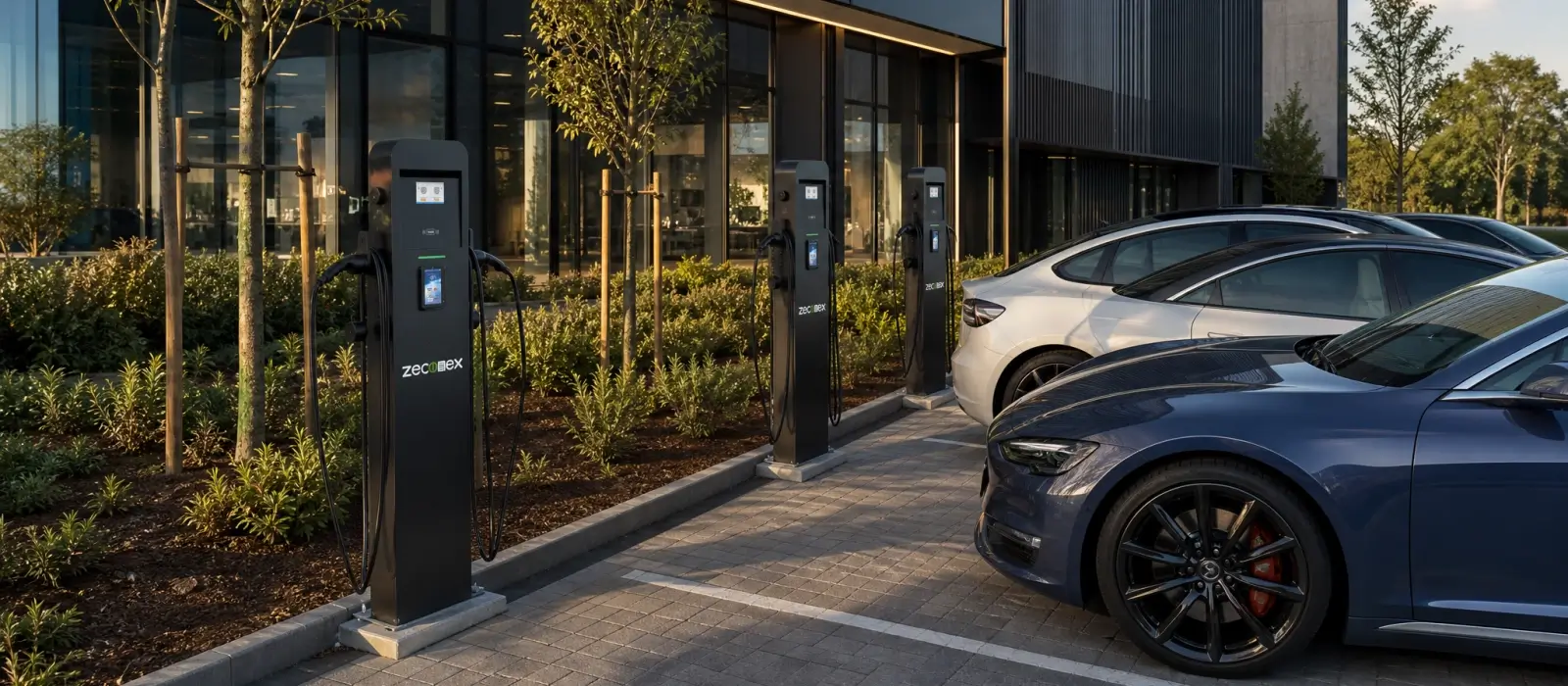
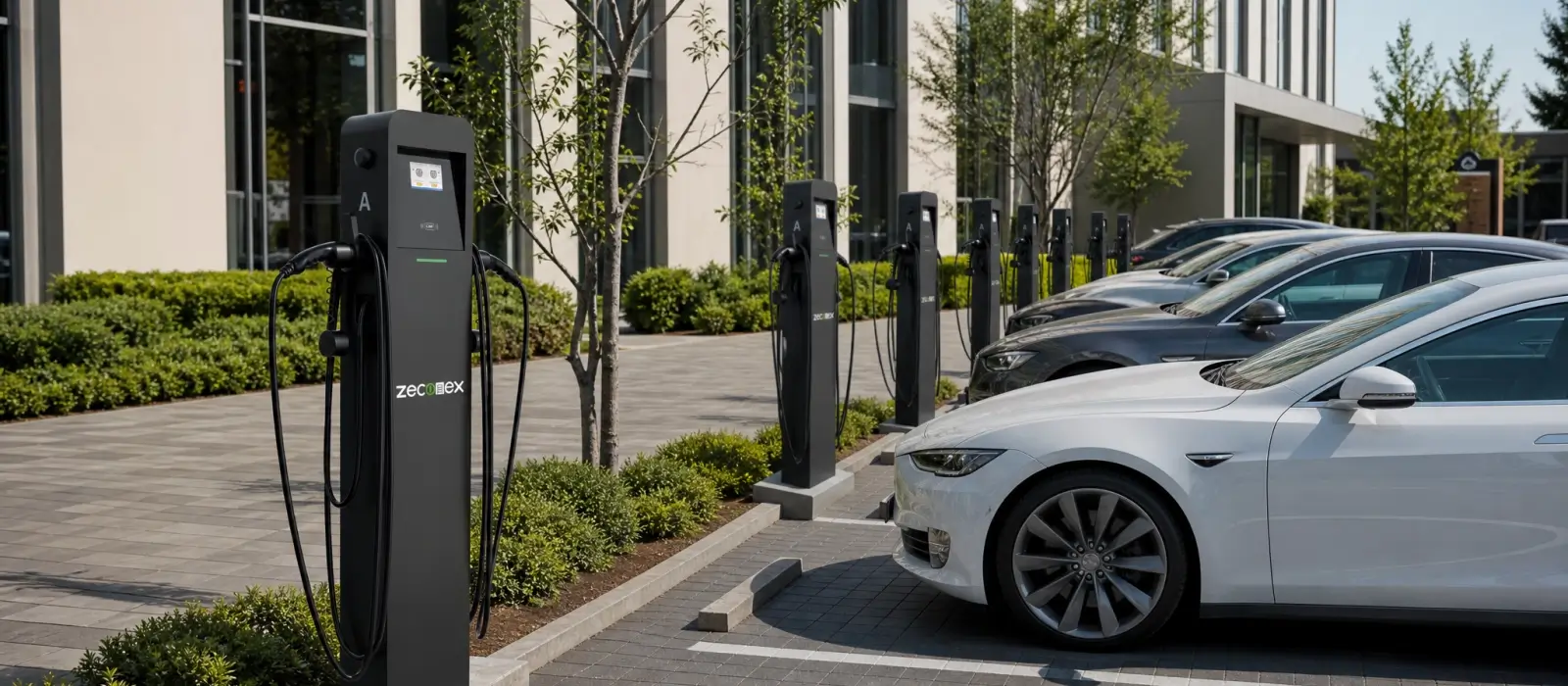
Commercial parking lots and shopping centers gain higher vehicle turnover without dedicating additional bays to charging. Office buildings can serve employee and visitor vehicles from a smaller equipment footprint. Fleet charging depots improve throughput by charging two vehicles per unit. Shared residential parking areas can offer more charging points while controlling both capital and maintenance costs. In each case, the dual-connector architecture matches equipment investment to actual concurrent demand.
Conclusion
A dual-connector EV charger is not simply additional hardware; it is an engineering approach that reduces infrastructure cost, raises utilization rates, and supports scalable commercial operations. ZECONEX dual-connector models combine concurrent charging capability, outdoor-ready construction, and open-protocol connectivity to meet the practical requirements of charge-point operators, fleet managers, and property developers.
For project-specific configuration, bulk supply, or technical evaluation, contact ZECONEX to discuss customized commercial EV charging solutions.