
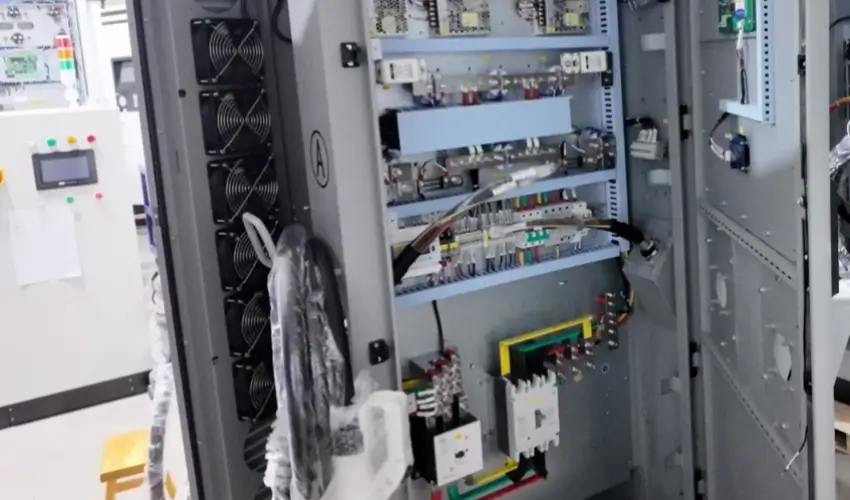
Reliable circuit breakers form the foundation of safe, high-uptime EV charging infrastructure. In commercial and public installations, a single protection failure can trigger downtime, safety incidents, insurance claims, or non-compliance with local electrical codes.
China’s low-voltage electrical industry has developed clear advantages in scale, cost-effective manufacturing, and rapid iteration of EV-specific residual current devices. Mature suppliers now offer products with CE, CB, TÜV, and other international certifications that align with European, Middle Eastern, and Asian installation requirements.
This article will introduce leading Chinese circuit breaker and electrical safety manufacturers, covering key selection criteria, major supplier capabilities, practical applications, and installation recommendations. It aims to help global buyers and charging operators better evaluate reliable electrical protection solutions.
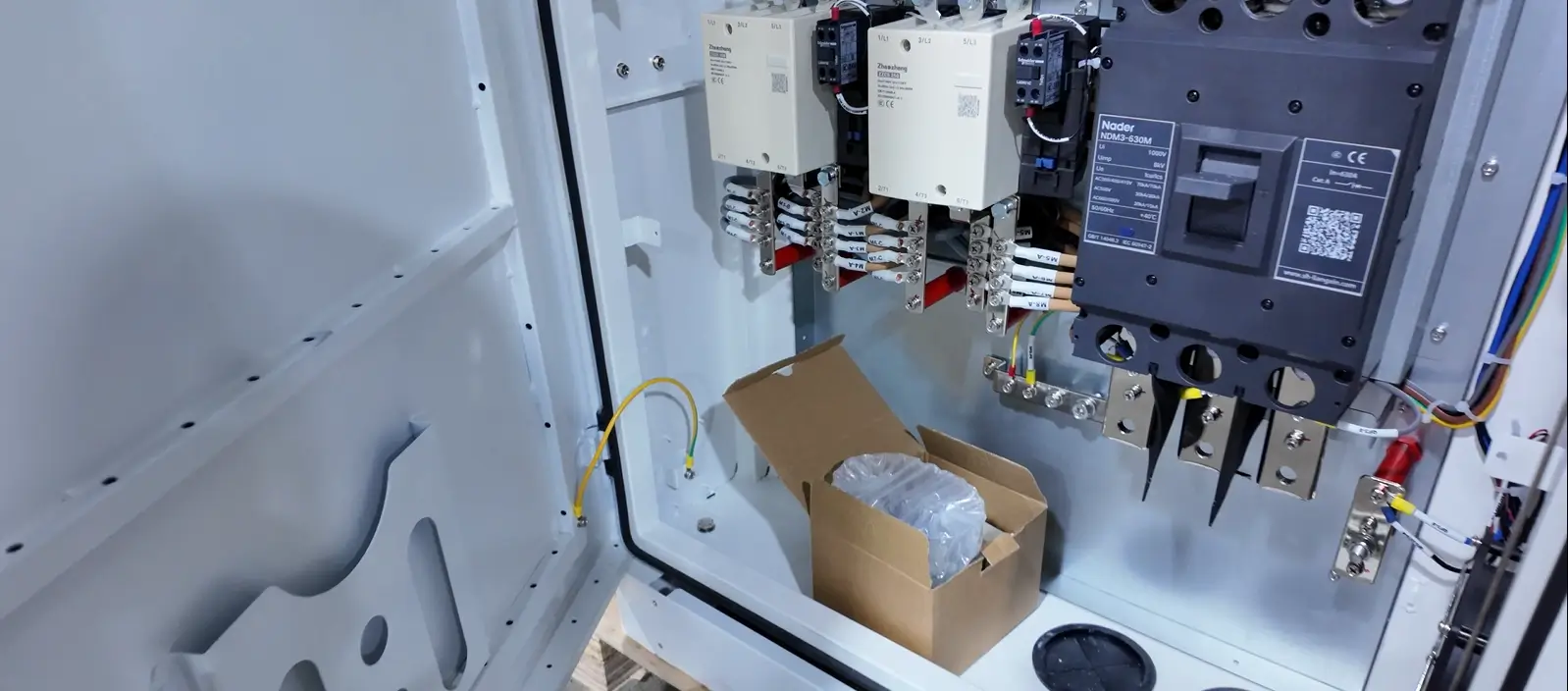
Key Selection Criteria for EV Charger Circuit Breakers
Start with continuous load capacity. EV charging is treated as a continuous load in most codes (including the NEC 125% rule). Size the breaker and upstream conductors for at least 125% of the charger’s maximum continuous current. A 32 A charger therefore needs a minimum 40 A breaker; a 48 A unit typically requires 60 A protection.
Residual current type is non-negotiable. Type A devices alone cannot reliably detect smooth DC leakage that may “blind” the mechanism. Specify either:
Type A + 6 mA DC (integrated RDC-DD / Type EV devices per IEC 62955), or
Type B (or dedicated EV-type) residual current protection that detects AC, pulsating DC, and smooth DC.
Breaking capacity must exceed the prospective short-circuit current at the installation point—commonly 6–10 kA for smaller commercial boards and 25–50 kA for larger sites. Trip curves should match the load profile; C-curve devices are widely used for general EV applications, while D-curve options suit higher inrush scenarios.
Leading Chinese Circuit Breaker Manufacturers for EV Applications
Chint

Global presence in low-voltage electrical solutions; extensive product portfolio covering MCB, MCCB, RCCB, RCBO, and power distribution equipment; strong experience in industrial and renewable energy projects.
One of China’s largest low-voltage groups, Chint has deployed cascading protection solutions (MCCBs + RCBOs) for EV charger projects in Europe, raising system short-circuit capacity significantly while optimizing space and cost. Its modular DIN-rail range and residual-current products carry broad international certifications and are already used by global automotive suppliers and charging operators.
TENGEN (Tianzheng Electric)

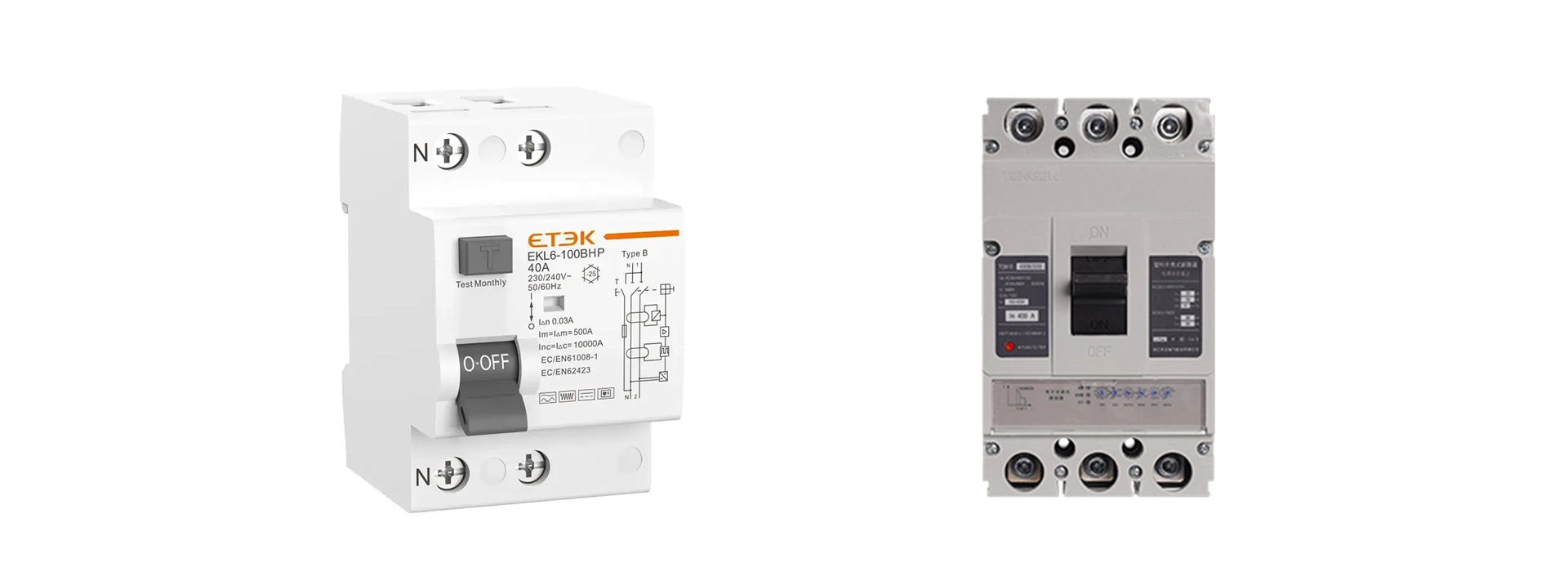
Tengen Electric provides a comprehensive portfolio of low-voltage electrical protection products, including moulded-case circuit breakers, miniature circuit breakers, RCCBs, and RCBOs. With applications covering new energy, charging infrastructure, and industrial power distribution, Tengen’s protection solutions are designed to deliver reliable electrical safety and stable operation for commercial and industrial environments.
Its products support international markets with certifications such as CE, CB, and TÜV, making them suitable for EV charger manufacturers and infrastructure projects requiring dependable circuit protection.
ETEK

ETEK Electric provides electrical protection solutions for EV charging applications, including Type EV RCCBs, RCCBs, RCBOs, and other low-voltage protection devices. Its EV protection products include Type A RCCBs with integrated 6mA DC detection compliant with IEC 61008-1 and IEC 62955, as well as Type B RCCBs and RCBOs designed for detecting AC, pulsating DC, and smooth DC residual currents according to relevant IEC standards.
With compact designs, flexible configurations, and international certification support, ETEK products are suitable for OEM EV charger manufacturers and charging infrastructure projects worldwide.
Delixi

Delixi Electric provides a wide range of low-voltage electrical products, including circuit breakers, residual-current devices, contactors, and surge protection devices. With extensive experience in power distribution and electrical protection, the company supports applications across industrial, commercial, and new energy sectors. Its comprehensive product portfolio and large-scale manufacturing capabilities make Delixi a reliable supplier for projects requiring stable and cost-effective low-voltage protection solutions.
ZECONEX Electrical Safety Approach
ZECONEX designs and manufactures commercial EV chargers with electrical safety as a core engineering priority. The company specifies proven Chinese brands that meet both Chinese production standards and international installation requirements.
ZECONEX selects Tengen (Tianzheng Electric) and ETEK for complementary strengths. Tengen contributes robust mechanical and thermal performance, high breaking capacity options, and proven durability in outdoor and multi-unit installations. ETEK supplies specialized residual-current protection (Type B / Type EV devices) that precisely address the 6 mA smooth DC residual current detection mandated by IEC 61851-1 and IEC 60364-7-722.
This combination delivers measurable benefits: reliable trip performance under continuous load, reduced risk of nuisance trips or blocking (RCD blinding) caused by smooth DC leakage, simplified compliance documentation for overseas projects, and long-term serviceability. Operators gain higher uptime, lower maintenance risk, and clearer audit trails for insurance and regulatory reviews.
Practical Precautions for Circuit Breaker Selection
Apply the 125 % continuous-load rule. Size the breaker at least 125 % of the charger's max continuous current (e.g., 32 A → 40 A minimum). Undersized breakers cause nuisance tripping under sustained load.
Distinguish RCCB from RCBO. An RCCB provides residual-current protection only and requires a separate MCB/MCCB for overcurrent/short-circuit protection. An RCBO integrates both functions—do not add a redundant MCB downstream.
Ensure short-circuit selectivity, not just leakage coordination. To avoid upstream nuisance tripping under fault conditions, compare instantaneous trip characteristics (I²t curves) between the upstream MCCB and downstream MCB/RCBO. This is the primary cause of cascading outages.
Match breaking capacity (Icu) to site conditions. Common commercial boards require 6–10 kA; high-fault-current sites may need 25–50 kA. Underspecified breakers pose a safety hazard.
Verify trip curve suitability. C-curve devices suit most EV loads; D-curve may be required for installations with high inrush currents (e.g., multiple chargers starting simultaneously).
Conclusion
Selecting the right circuit breaker supplier is fundamental to building reliable EV charging infrastructure. Continuous-load capability, correct residual-current technology, adequate breaking capacity, thermal performance, and verifiable certifications determine long-term safety and uptime for commercial operators.
ZECONEX combines rigorous electrical design with carefully chosen Chinese partners—Tengen and ETEK—to deliver chargers that meet demanding international protection requirements without compromising cost-effectiveness.
Contact ZECONEX today for professional EV charging solutions engineered for safety, compliance, and operational reliability.