
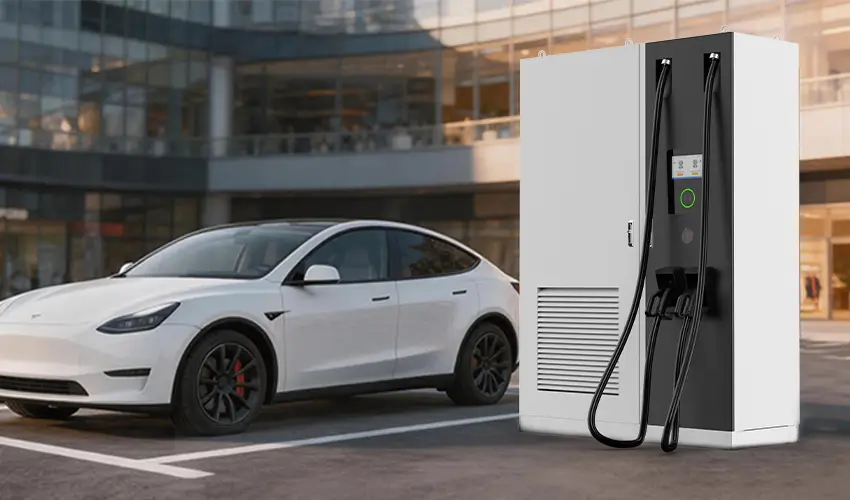
As the UK accelerates the rollout of zero-emission vehicle policies, the cost of a commercial EV charging station goes far beyond the sticker price of the equipment. It is a full lifecycle investment—covering hardware procurement, electrical infrastructure, and long-term operations.
Drawing on 12 years of international project experience, ZECONEX breaks down the key cost drivers step by step, providing a practical framework for informed decision-making.
Key Policies Shaping the Cost of Commercial EV Charging in the UK
The UK government has committed to achieving 100% zero-emission new car sales by 2035, effectively phasing out petrol and diesel vehicles. To accelerate EV adoption, a range of financial incentives and tax benefits have been introduced. These include grants for businesses installing EV charge points (up to £500 per unit), as well as extended 100% first-year capital allowances for EV charging infrastructure.
While these measures lower the barrier to entry and speed up network deployment, they also raise the bar for compliance. Commercial charging projects must now meet stricter requirements for grid connection and smart functionality. As a result, EV charging stations are no longer just equipment purchases—they are increasingly complex, capital-intensive electrical infrastructure projects.
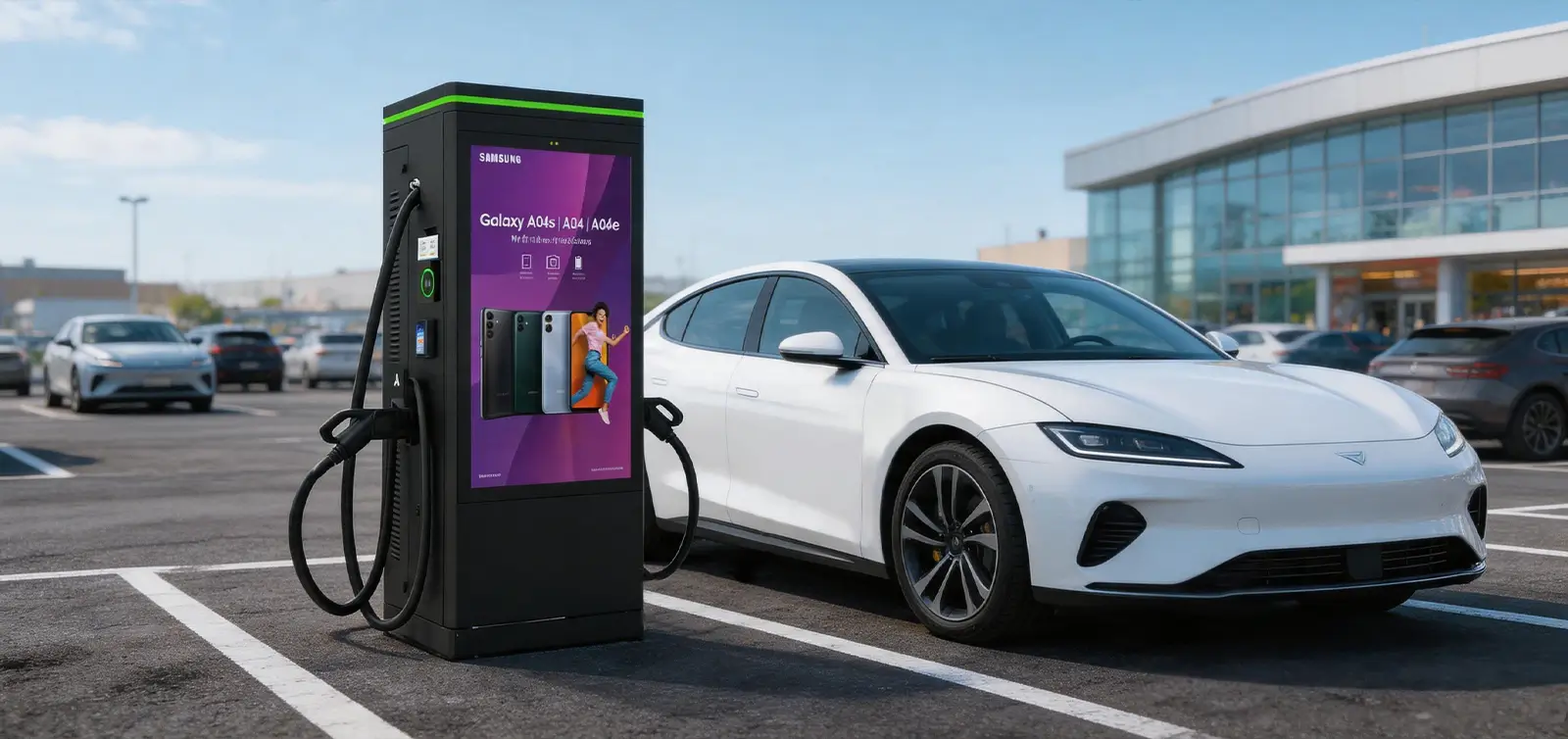
Typical Cost Range for Commercial EV Charging Stations
Costs vary depending on charging speed and system architecture:
AC chargers (7kW–22kW): £1,000 – £3,000+ per unit
DC fast chargers (43kW–50kW): £10,000 – £25,000+ per unit
DC ultra-fast chargers (100kW–350kW): £25,000 – £60,000+ per unit
BESS-integrated fast charging systems (120kW–800kW): £80,000 – £300,000+ per system
Key Factors Affecting the Cost of Commercial EV Charging Stations
1. Compliance and Regulatory Costs
Deploying a commercial EV charging station in the UK requires meeting a range of regulatory and planning requirements. Depending on the site conditions and project scope, planning permission from the local authority may be required—particularly for installations in public areas, commercial car parks, or projects involving changes in land use. In addition, the project must comply with electrical safety standards, construction regulations, and accessibility requirements.
This results in additional time and upfront costs, including site assessments, documentation, and coordination with authorities. Businesses typically need to engage professional consultants, develop compliant system designs, and handle legal and administrative processes, all of which contribute to the overall project cost.
2. Charger Hardware Costs
Hardware procurement is the most visible upfront capital expense in a commercial EV charging project. Based on current market offerings, chargers generally fall into three categories: Level 2 (AC) chargers, DC fast chargers, and BESS-integrated charging systems. For commercial investors, understanding the initial hardware investment is essential for evaluating overall project costs.
2.1 Level 2 (AC) Chargers
These are the lowest-cost options. Typically rated between 7kW and 22kW, they do not require high-power rectification modules, keeping material and manufacturing costs relatively low. The low upfront investment allows operators to scale quickly across long-dwell locations such as hotels, office parks, and residential developments.
2.2 DC Fast Chargers
Costs increase significantly with power. As output scales from 30kW up to 240kW, unit prices move into the tens of thousands of pounds. The main cost driver is the integrated high-frequency power modules—often achieving efficiencies above 95%—which rely on advanced power semiconductors and thermal management systems. Liquid-cooled charging cables further add to the cost, but enable continuous high-current delivery (up to 600A), which is essential for maintaining throughput at high-traffic charging sites.
2.3 BESS-Integrated Charging Systems
These represent the highest upfront investment. They integrate DC charging modules, large-capacity lithium iron phosphate (LFP) battery systems, and fire protection and thermal management into a single solution, resulting in significantly higher procurement costs than standalone DC chargers. However, their value lies in avoiding expensive grid upgrades through on-site energy storage, while also enabling peak shaving and load shifting to reduce long-term energy costs.
3. Infrastructure and Installation Costs
Infrastructure and installation are often the most unpredictable elements in a commercial EV charging project.
- Grid connection costs: The primary cost driver. Most commercial sites were not originally designed for EV charging loads. If the required capacity exceeds the existing transformer limits, grid upgrades or reinforcement will be necessary, significantly increasing costs.
- Location and distance factors: Site location has a direct impact on both construction and grid connection costs. The further the site is from the power source, the higher the cable installation costs. Remote locations may also require new high-voltage lines or switching equipment.
- Additional features: Battery storage, solar integration, and advanced software systems can further increase overall project costs.
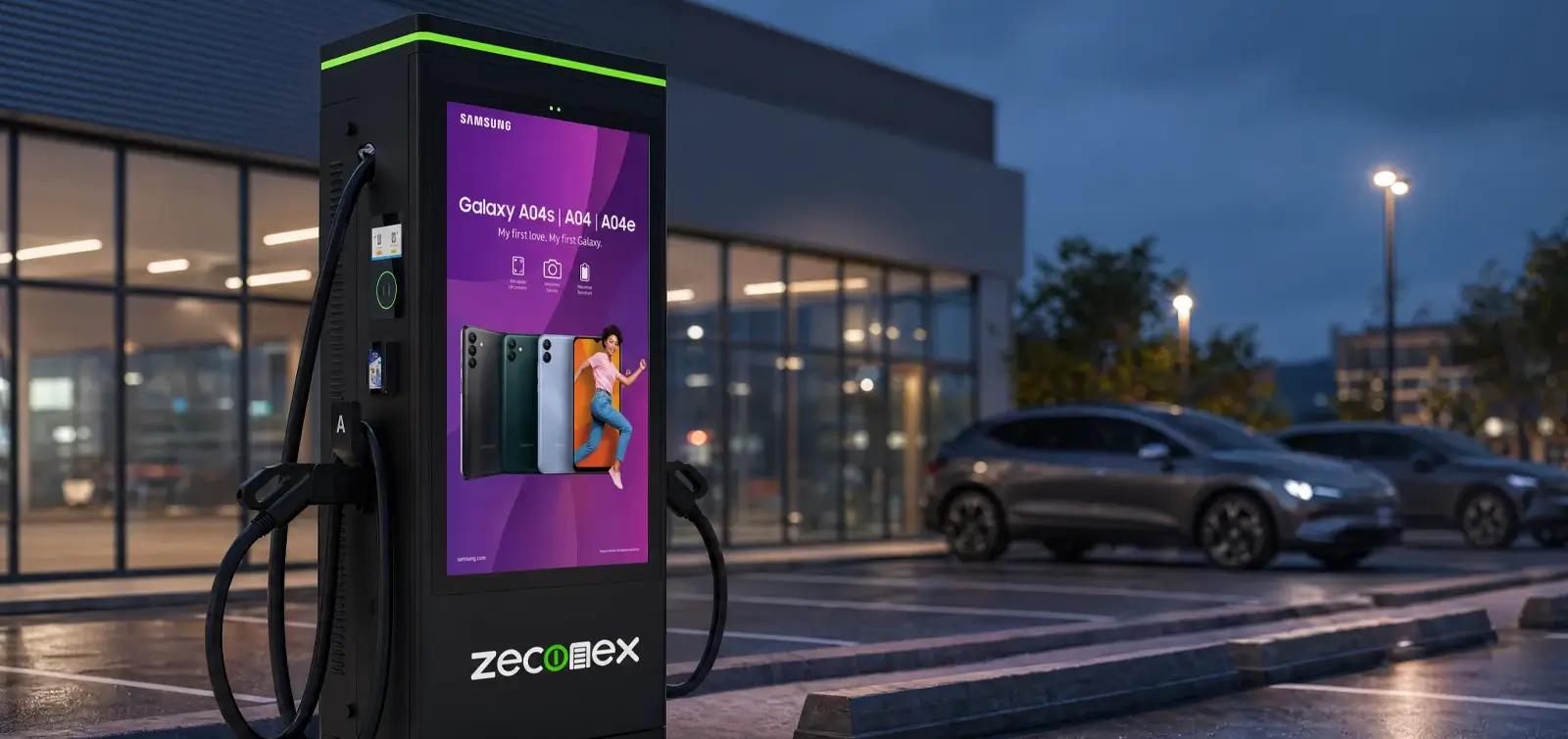
- Civil works: A key cost component, including trenching, foundation construction, and protective installations such as bollards. Each involves labor, materials, and equipment. For example, chargers integrated with large digital displays may have higher installation costs, but can offset expenses through advertising revenue over time.
- Project scale: Scale introduces a different cost dynamic. Large charging hubs require significant upfront investment in electrical infrastructure and civil works, but the cost per charger is typically lower than that of smaller, distributed installations. Economies of scale apply strongly at the infrastructure level.
4. Ongoing Operational Costs
Ongoing expenses during the operational phase are the key factor in determining whether a commercial EV charging station is profitable.
4.1 Software and Network Costs
Commercial EV charging infrastructure is fundamentally a software-driven asset.
Software and network services form the foundation of digital operations. Chargers connect to cloud-based management platforms via OCPP, enabling remote monitoring, time-of-use pricing, firmware updates, and fault diagnostics. End users complete the charging and payment process through mobile apps or integrated payment systems.
These platforms typically charge either an annual subscription fee or a transaction-based commission, replacing high manual management costs with predictable and scalable operating expenses.
4.2 Maintenance and Repair
Maintenance and repair costs are closely tied to the original quality of the equipment. Lower-cost chargers often lead to frequent failures, offsetting any initial savings through higher downtime and repair expenses.
In contrast, high-quality systems incorporate IP66-rated protection, multiple layers of electrical safety, and optimized airflow design. These upfront design advantages significantly reduce lifecycle maintenance costs and minimize revenue losses caused by downtime.
4.3 Energy Costs
Energy is the largest and most variable operating expense. Commercial electricity tariffs often have significant peak and off-peak price differences.
By leveraging cloud-based platforms, operators can implement time-of-use pricing strategies to encourage off-peak charging. Demand management can be used to limit peak power draw, helping avoid high demand charges from utilities.
This dual approach reduces costs both at the per-kWh level and across overall electricity contract charges.
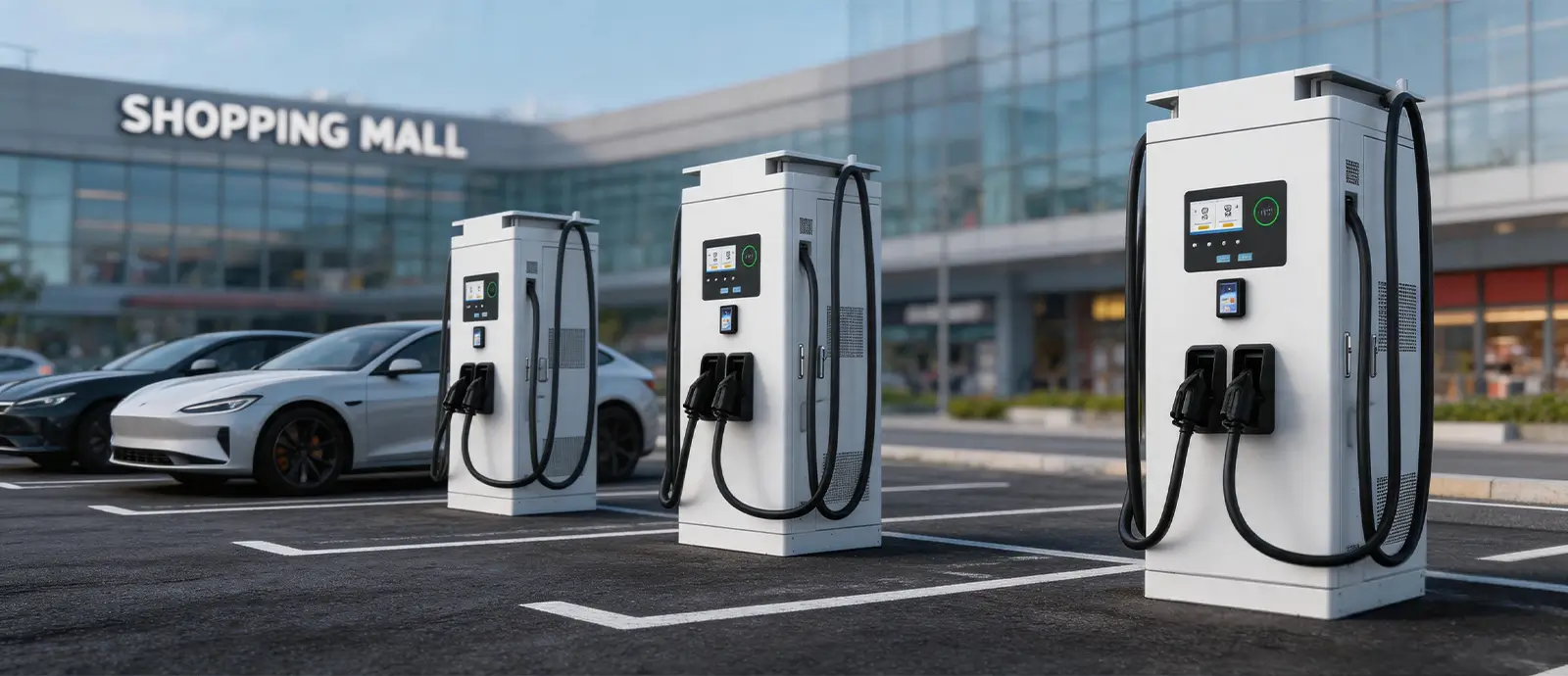
How ZECONEX Helps You Reduce Costs
Cost control in commercial EV charging spans hardware, infrastructure, and operations. With an integrated, end-to-end approach, ZECONEX delivers measurable cost savings across key areas:
Reduce hardware energy losses: By using high-efficiency, tier-one power modules with conversion efficiency exceeding 95%, ZECONEX minimizes energy loss during charging, improving the amount of usable energy delivered and optimizing cost per kWh over time.
Reduce grid upgrade costs: ZECONEX’s dynamic load balancing technology uses CT monitoring at the distribution panel to track total building load in real time. It automatically adjusts the output of each charging point to prevent overload, enabling more chargers to be deployed without triggering costly grid upgrades—saving tens to hundreds of thousands of pounds in infrastructure costs.
Reduce maintenance and downtime costs: Industrial-grade protection and optimized airflow design significantly reduce failure rates, lowering maintenance expenses and minimizing revenue loss caused by downtime.
Reduce digital operating costs: With open OCPP compatibility, ZECONEX chargers can seamlessly integrate with leading cloud management platforms, replacing high on-site labor costs with scalable and predictable software-based operations.
Are Commercial EV Charging Stations Profitable?
Yes—commercial EV charging stations can be profitable, but profitability ultimately depends on how well both costs and revenue streams are structured.
From a cost perspective, the largest upfront variable is often grid upgrade costs. Prioritizing sites with sufficient electrical capacity, or using dynamic load balancing to avoid costly upgrades, is a critical first step in making a project viable.
From a revenue perspective, profitability goes beyond charging fees alone. Time-of-use pricing strategies allow operators to buy electricity at off-peak rates and sell during peak periods, capturing a margin. Chargers integrated with digital displays can generate ongoing advertising revenue, while increased foot traffic during charging sessions can drive additional retail sales.
In addition, UK government incentives, such as the Workplace Charging Scheme and 100% first-year capital allowances for EV charging infrastructure, help lower the initial investment barrier.
EV Charging Station Profitability Estimate Table
Initial Investment
| Item | Cost (GBP) | Notes |
| Charging Hardware (2 units) | £50,000 – £60,000 | 120kW dual-gun chargers with CCS2 cables, based on ZECONEX FOB pricing |
| Shipping & Import Duties | £6,000 – £8,000 | Sea freight, insurance, UK import duties, and VAT |
| Grid Connection & Upgrades | £20,000 – £80,000 | Highly site-dependent; the largest cost variable |
| Civil Works & Installation | £15,000 – £25,000 | Foundations, trenching, cabling, bollards, labor |
| Cloud Platform (Year 1) | £1,200 – £2,000 | OCPP platform access and management license |
| Total Initial Investment | £92,200 – £175,000 | Excluding extreme grid upgrade scenarios |
Annual Revenue
| Item | Revenue (GBP) | Notes |
| Charging Fees | £72,000 – £96,000 | Based on 20 sessions/day, 40kWh per session, £0.25–£0.35/kWh |
| Advertising Revenue (Optional) | £3,000 – £6,000 | Optional 55” display integration |
| Total Annual Revenue | £75,000 – £102,000 |
Annual Operating Costs
| Item | Cost (GBP) | Notes |
| Electricity Costs | £28,000 – £32,000 | Based on £0.12–£0.15/kWh average purchase price |
| Cloud Platform Renewal | £1,200 – £2,000 | Annual software/service fees |
| Maintenance & Repairs | £1,500 – £3,000 | Inspection, cleaning, consumables |
| Insurance & Miscellaneous | £800 – £1,200 | |
| Total Operating Costs | £31,500 – £38,200 |
Note: All figures are estimates. Final returns will also vary by location, depending on site conditions, actual utilization rates, and additional revenue streams (such as idle fees or retail-related income).
Conclusion
As the UK continues to advance its zero-emission policies, investing in commercial EV charging infrastructure represents a capital-intensive, long-term opportunity with clear growth potential.
Whether you are in the planning stage or looking for a reliable partner with customization capabilities and global project experience, lifecycle cost efficiency should be at the core of your decision-making.
For specific product selection, system configuration, or project deployment needs, feel free to contact ZECONEX. With our integrated technology and product expertise, we are ready to help you build a cost-efficient and commercially viable EV charging solution.
FAQ
1. How long does it take to install EV charging stations for commercial sites?
Level 2 (AC) charging installations are typically completed within 2–4 weeks. DC fast-charging projects take longer, usually 8–16 weeks.
2. Who is responsible for installing commercial EV charging stations?
Qualified turnkey providers typically manage the entire process, including planning permission, electrical design and construction, equipment installation and commissioning, as well as site preparation. Working with an experienced provider helps ensure better control over timelines and costs.