
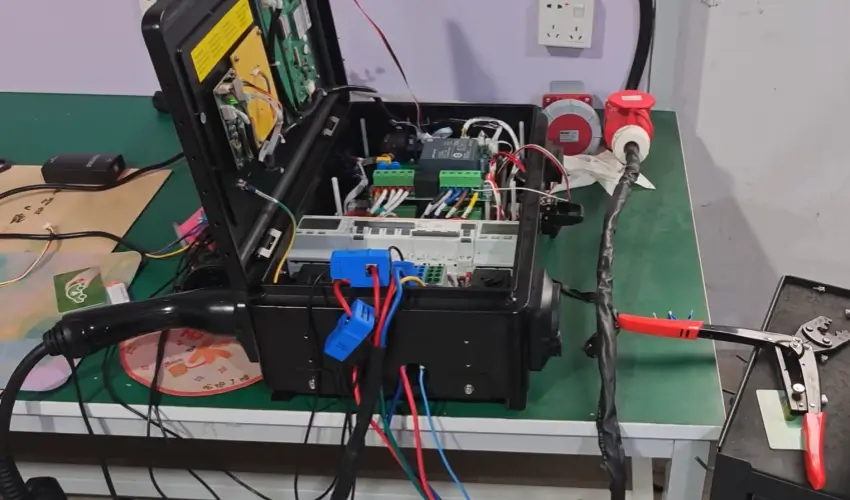
In high-traffic, high-utilization commercial EV charging stations, unexpected charging interruptions and equipment overheating are two of the most common issues affecting operational efficiency and user experience.
In most cases, these problems stem from predictable and preventable engineering factors. With optimized system design, effective thermal management, and robust protection mechanisms, they can be significantly reduced. In this article, we'll examine the engineering root causes behind these issues and explore how ZECONEX's commercial EV charging solutions help minimize downtime and maximize system reliability.
Why EV Chargers Stop Charging
Commercial charging stations rarely fail for a single obvious reason. Multiple layers of protection and system interdependencies are usually involved.
1. Grid Voltage Instability and Power Quality Issues
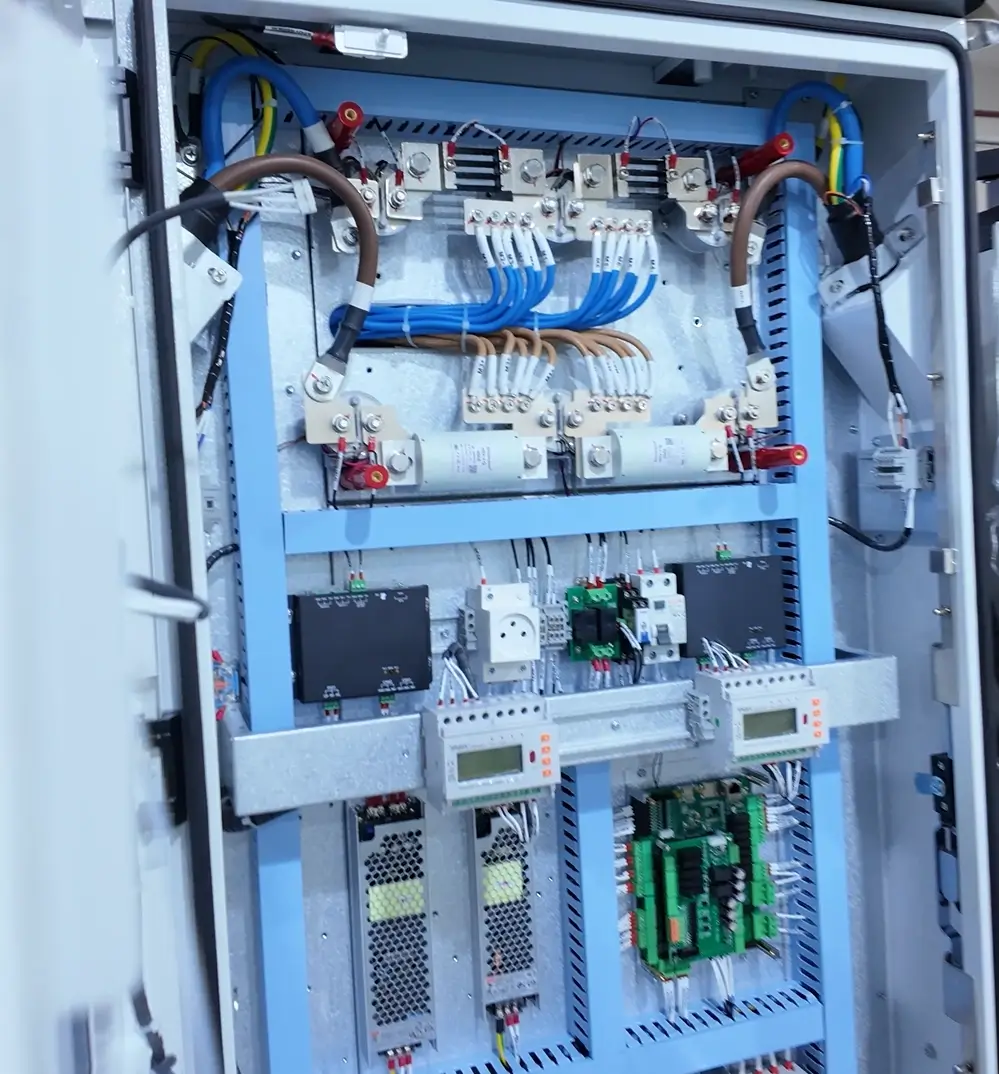
Many sites experience voltage sags, swells, or harmonic distortion, especially during peak load or when co-located with other heavy equipment. DC fast chargers with active front-end rectifiers are sensitive to these conditions. When input voltage falls outside tight tolerances (typically ±10-15%), the charger’s protection logic initiates a safe shutdown to prevent damage to IGBTs or MOSFETs in the power conversion stages.
2. Overcurrent and Residual Current Protection Tripping
Incorrect upstream breaker sizing, poor cable terminations, or ground faults frequently trigger RCDs (Type A + 6 mA DC residual current devices, common in modern AC and DC units). In dual-gun or high-power installations, simultaneous high-current draws can exceed local circuit capacity if dynamic load balancing (DLB) is not properly implemented or configured.
3. Communication and Protocol Interruptions
OCPP 1.6J/2.0 sessions can drop due to unstable 4G/Wi-Fi/Ethernet connections, backend timeouts, or CAN/PLC issues between the charger controller and power modules. ISO 15118 Plug & Charge handshakes are particularly sensitive—any mismatch in certificate handling or timing can abort the session. Even when the physical power link remains intact, the charger may pause or terminate to maintain safety and billing integrity.
4. Battery Management System (BMS) Limitations and Thermal Limits
Modern EVs actively manage charging based on cell temperature, SoC, and predicted load. When the vehicle’s BMS requests a reduction or pause, the charger respects it. What operators perceive as “stopping” is often the vehicle protecting itself. High ambient temperatures exacerbate this.
5. Connector and Cable Temperature Monitoring
High-power DC charging (especially >150 kW) generates significant heat at the connector pins and cable. Temperature sensors embedded in CCS2, CHAdeMO, or NACS connectors trigger derating or shutdowns when thresholds (typically 80–90°C) are approached to prevent insulation damage or contact degradation.
6. Software Safety Logic and Fault Diagnostics
Modern chargers run sophisticated firmware with layered safety interlocks. Over-temperature on power modules, insulation resistance drops, emergency stop activation, or even transient faults in current sensors can force a protective pause. In networked systems, remote commands or failed heartbeat signals to the CSMS can also interrupt sessions.
Why EV Chargers Overheat
Overheating is often the precursor to repeated shutdowns. Understanding heat generation and dissipation paths is critical.
1. Ambient Conditions and Installation Environment
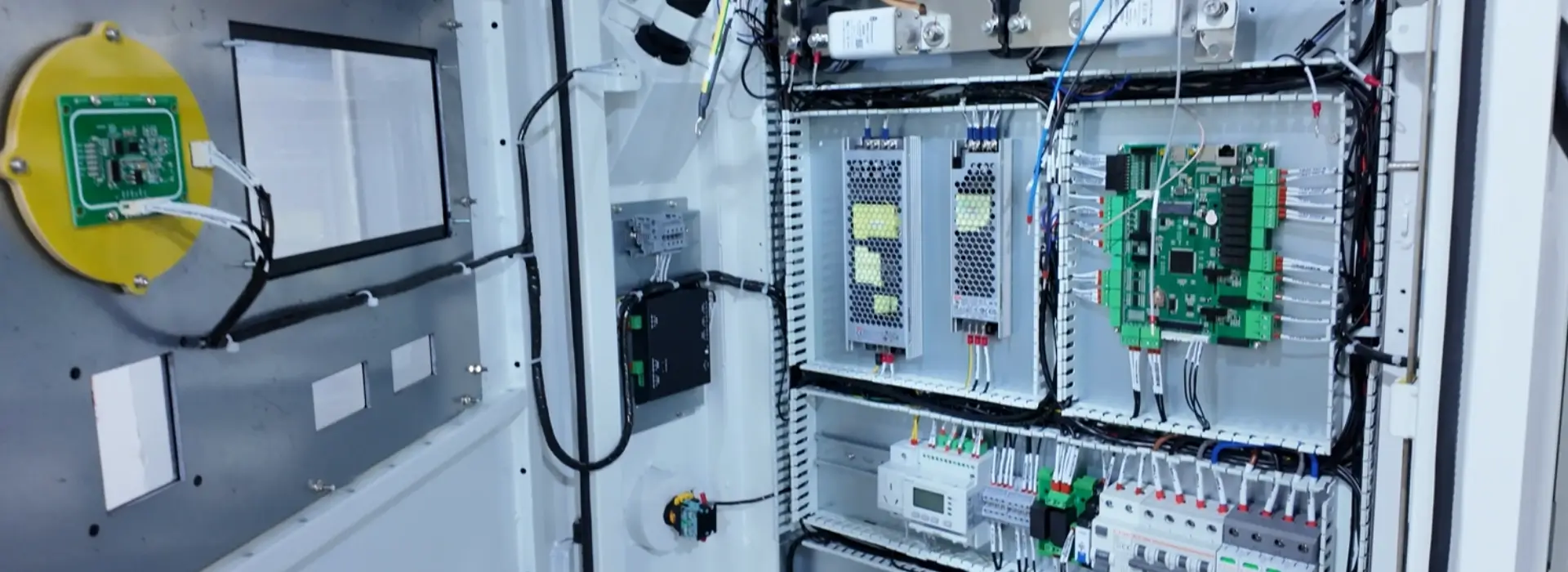
Charging stations exposed to direct sunlight, poor ventilation, or high ambient temperatures (>35–40°C) quickly push internal components beyond optimal ranges. Air-cooled systems suffer most here.
2. Insufficient or Degraded Cooling
Many entry-level chargers rely on simple forced-air cooling with axial fans. Dust accumulation, fan bearing wear, or blocked intake grilles dramatically reduce airflow. In liquid-cooled high-power modules, pump failures or coolant degradation produce similar results. Heat dissipation paths from IGBT modules to heatsinks become compromised, raising junction temperatures rapidly.
3. Undersized Power Modules or Continuous High-Load Operation
Running chargers at or near maximum rated power for extended periods without adequate derating logic stresses semiconductors. Power conversion efficiency typically drops at extreme loads, converting more energy into heat. Cable resistance (I²R losses) and connector contact resistance add to the thermal load, especially with undersized or long cables.
4. Poor Airflow Design and Thermal Resistance
Compact wall-mounted designs can suffer from internal airflow short-circuiting if the component layout does not optimize heat flow. High thermal resistance between power devices and external surfaces limits passive dissipation.
How Commercial-Grade Chargers Prevent Overheating and Interruptions
Premium commercial chargers address these issues through deliberate engineering:
- Intelligent Thermal Management Systems: Multiple high-accuracy temperature sensors placed at critical junctions (power modules, busbars, connectors, inlet air) feed real-time data to the controller. Dynamic power derating automatically reduces output before shutdown thresholds are reached, maintaining operation at safe levels.
- Advanced Cooling Architectures: air-cooled or liquid-cooled thermal management systems. Combined with high-efficiency (>95%) conversion stages, this reduces waste heat generation.
- Robust Power Electronics and Redundancy: Parallel power modules allow continued operation at reduced capacity if one module faults. Quality IGBTs/MOSFETs with generous thermal margins and fast protection circuits improve resilience.
- Comprehensive Protection and Monitoring: Integrated MID-certified metering, Type A + 6mA DC RCDs, surge protection (SPD), over/under voltage/frequency protection, and insulation monitoring work together. Real-time diagnostics and remote firmware OTA updates keep systems current.
- Smart Load Management: Dynamic load balancing via CT clamps or OCPP integration prevents upstream overloads. This is essential for sites with limited grid connection capacity.
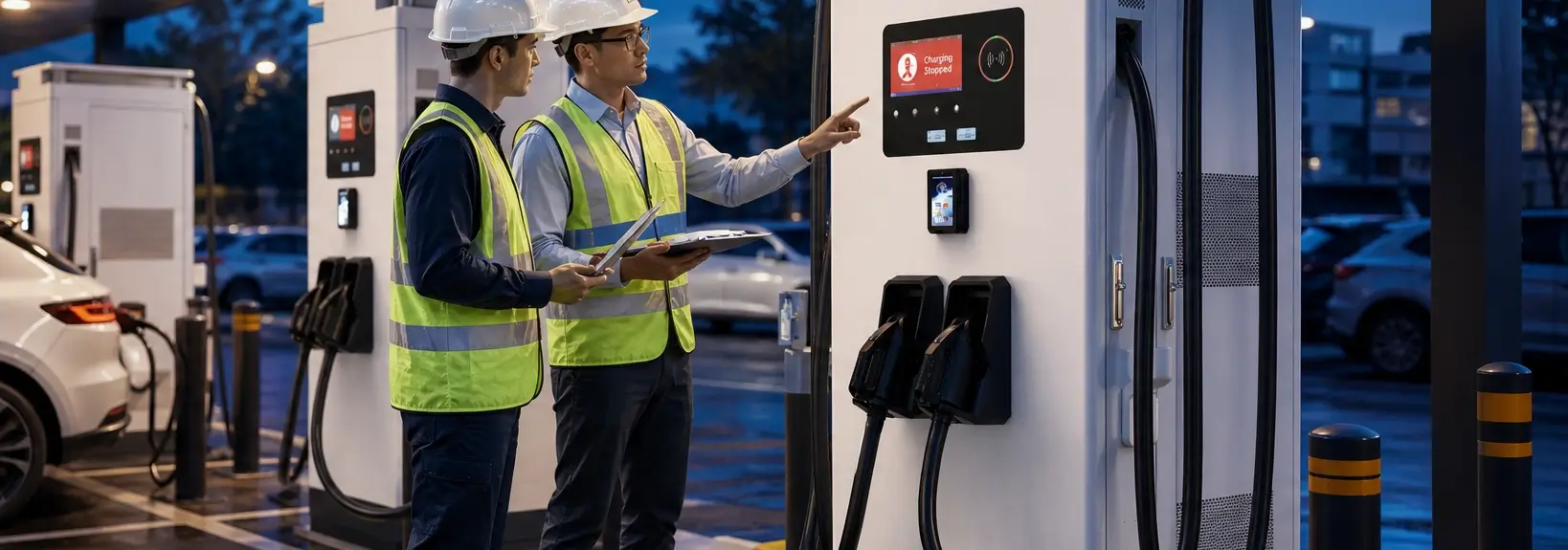
Installation Issues That Commonly Cause Problems
Even the best charger will underperform if site execution is poor:
- Undersized or improperly terminated cables leading to voltage drop and heating.
- Inadequate grounding or equipotential bonding.
- Insufficient clearance for ventilation or exposure to water/dust beyond the unit’s IP rating (IP55 is common; IK10 for vandal resistance).
- Lack of scheduled maintenance—cleaning filters, checking connections, verifying torque on terminals.
- Poor coordination with the local utility for transformer capacity and harmonic compliance.
Practical Steps to Reduce Downtime
Design Phase: Perform proper load studies, including peak coincidence factors. Specify chargers with proven operating temperature ranges (-30°C to +55°C typical for commercial units) and appropriate IP/IK ratings.
Procurement: Request detailed thermal test reports, MTBF data, and component sourcing information from suppliers.
Installation: Follow manufacturer torque specifications, ensure proper airflow, and commission with full load testing.
Operations: Implement remote monitoring via OCPP-compliant platforms. Schedule quarterly preventive maintenance. Use predictive diagnostics to address issues before failure.
Firmware & Configuration: Keep software updated and correctly configure load balancing, authentication modes (RFID, app, Plug & Charge), and billing integration.
What Buyers Should Evaluate When Selecting Commercial Chargers
Procurement teams and engineers should look beyond headline kW ratings:
Thermal Design & Cooling: Ask for details on sensor placement, derating curves, and cooling method.
Protection & Safety: Confirm integrated DC residual current protection, comprehensive fault logging, and compliance with IEC 61851, IEC 62196, and local grid codes.
Reliability Indicators: Power module redundancy, high-quality connectors with liquid-cooled options where needed, and proven field MTBF.
Serviceability: Modular design for quick field replacement of fans, filters, or power modules. Remote diagnostics and local spare parts availability.
Software & Integration: Full OCPP 1.6J/2.0 support, flexible authentication, robust API/web dashboard, and future-proofing (e.g., ISO 15118 readiness).
Certifications & Warranty: Relevant regional certifications (CE, TUV, MID, etc.) and clear warranty terms with responsive technical support.
Total Cost of Ownership: Factor in efficiency, maintenance needs, expected lifespan, and downtime risk rather than just upfront price.
Building Reliable Commercial Charging Infrastructure
Frequent charging interruptions and overheating. In most cases, they result from the combined effects of equipment design, installation quality, and operating conditions. Understanding these engineering fundamentals enables project teams to make better decisions during product selection, system design, and deployment.
Contact ZECONEX today to discuss your project requirements. Our engineering team is ready to deliver tailored EV charging solutions and expert technical guidance for your next deployment.