
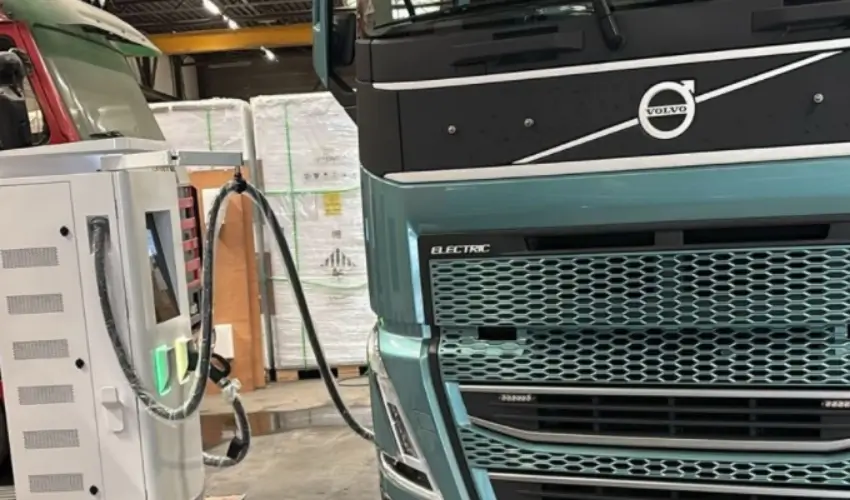
Europe’s electric truck market is accelerating. Regulatory pressure, combined with improving vehicle economics and targeted incentives, is driving meaningful adoption — yet progress remains uneven across countries and segments. As fleet operators and charge point operators prepare for this shift, high-power DC fast charging infrastructure has become a decisive factor in making e-trucks operationally viable at scale.
Why Electric Truck Fleets Need High-Power DC Fast Charging
Heavy-duty electric trucks (Class 8) typically feature large battery packs ranging from 300–600+ kWh. Partial or full charges in 30–60 minutes demand significantly higher power than light-duty EV applications. Lower-power chargers (e.g., 150 kW) result in extended dwell times, reduced vehicle utilization, and higher per-kWh operational costs.
Key drivers include:
Tight scheduling windows — Nighttime depot charging or short midday top-ups.
High daily mileage — Many fleets target 400–600+ km per day.
Grid and site constraints — Power availability and demand charges vary by location.
Fleet scalability — Adding vehicles without proportional infrastructure expansion.
High-power DC systems minimize these issues by delivering more energy in less time, directly improving asset utilization and ROI.
What Charging Power Is Best for Different E-Truck Fleets?
Small Regional Fleets (5–20 E-Truck)
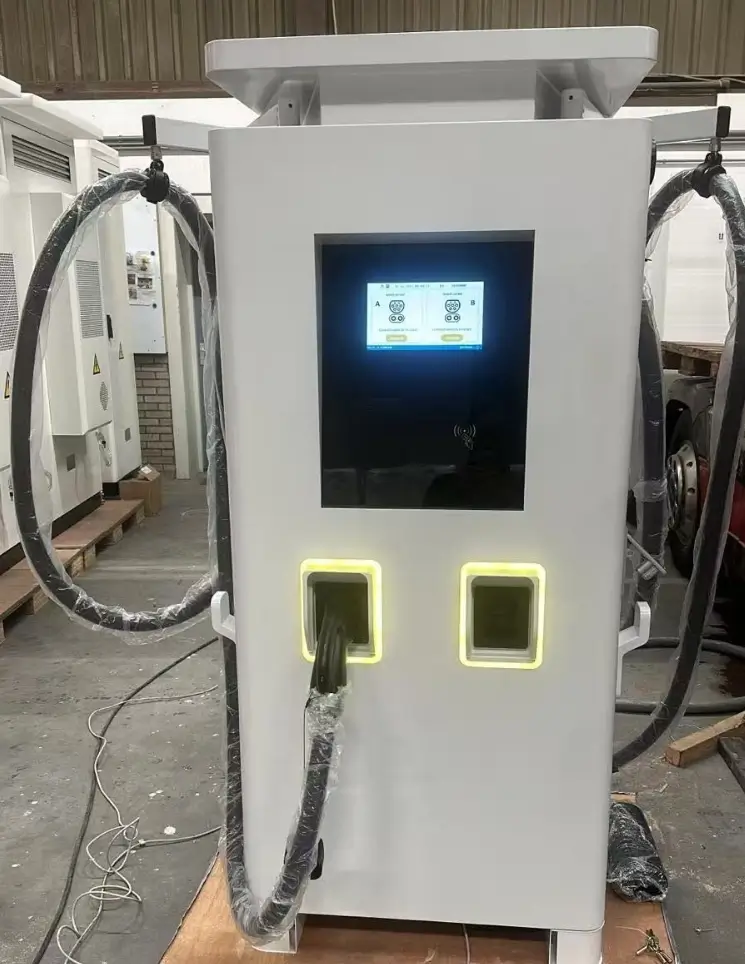
150–320 kW DC fast chargers are generally sufficient for overnight depot charging. Recommendation: Equip 2–6 units depending on simultaneous charging needs. This setup supports efficient top-ups with minimal grid upgrades.
Medium to Large Fleets (20–100+ E-Truck)
320–480 kW DC fast chargers are recommended to handle higher throughput. Recommendation: Start with 6–15 units (with power sharing capability) and plan for expansion. This ensures multiple trucks can charge concurrently during peak depot hours.
High-Utilization Operations (E.G., Port Drayage, Distribution Hubs, or Long-Haul Relay Stations)
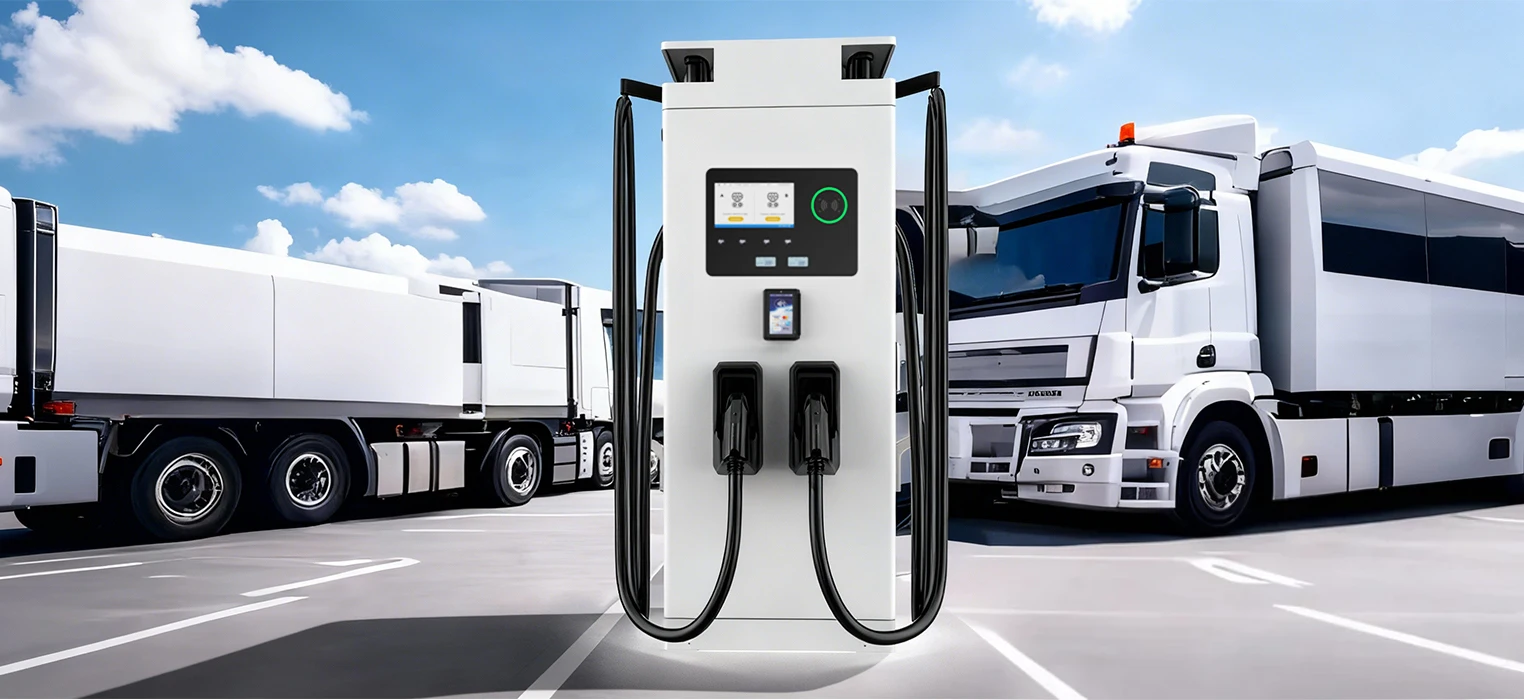
320–480 kW chargers, often combined with larger Battery Energy Storage Systems (BESS) or configurations up to 400–800 kW. Recommendation: Deploy 8–20+ units with intelligent load management to support rapid turnaround and minimize downtime. BESS integration helps manage peak demand and lower electricity costs.

Key Features to Look for in a Fleet DC Fast Charger
Prioritize these attributes for reliable fleet performance:
High continuous power delivery — Consistent output across a wide voltage range (e.g., 150–1000V) to match varying battery states without derating.
Efficient power sharing — Dynamic allocation across multiple guns for optimal utilization.
Robust thermal management — Liquid or advanced air cooling for cables and connectors to support sustained high-current sessions.
Smart energy management — Integration with site load balancing, solar PV, and battery storage to reduce demand charges.
OCPP 1.6J (upgradable to 2.0) — Seamless backend integration with existing CPO platforms for monitoring, billing, and remote management.
Comprehensive safety & compliance — Type A + DC residual current protection, surge protection, temperature monitoring, and relevant certifications (CE, and pathway to market-specific needs).
Durability for commercial use — IP55+ rating, IK10 vandal resistance, wide operating temperature range (-30°C to +50°C or better), and long cable lengths for flexible parking.
User & fleet-friendly interfaces — RFID/app/Plug & Charge options, plus detailed logging for maintenance and billing.
These features translate into lower total cost of ownership through reduced downtime, lower maintenance, and better energy efficiency.
How to Choose the Right DC Fast Charger for Your Fleet
1. Assess your power availability
Conduct a site audit for grid capacity, transformer sizing, and potential upgrades.
2. Model charging profiles
Calculate required energy per vehicle and available dwell time.
3. Evaluate total cost of ownership
Factor in efficiency, maintenance, scalability, warranty, and software costs beyond upfront price.
4. Integration readiness
Ensure compatibility with your fleet management, energy management, and payment systems.
5. Future-proofing
Modular architecture, ISO 15118 support, and OTA firmware updates.
6. Supplier support
Proven track record with fleets, technical expertise, and responsive after-sales service.
A thoughtful evaluation prevents costly retrofits later.
ZECONEX 320–480kW Fleet Charging Solution
ZECONEX offers high-power DC fast charging systems built for demanding fleet environments. Leveraging their portfolio of DC chargers (including scalable models up to 240 kW and power modules), the 320–480 kW solutions feature modular design for flexible deployment.
Standout capabilities include:
High-efficiency power conversion (>95%) with excellent power factor.
Support for CCS2, CCS1, NACS, and other connectors with liquid-cooled options for sustained high power.
Advanced OCPP integration with cloud platform for remote monitoring, diagnostics, and load management.
Robust safety features including multi-level protections and reliable RCD.
Compatibility with dynamic load balancing and renewable integration.
Durable outdoor-rated construction suitable for depot and highway use.
These systems help fleets achieve faster turnaround, lower energy costs, and simplified operations through centralized management.
Why Choose ZECONEX?
With over a decade of experience, ZECONEX provides end-to-end solutions — from portable and wallbox units to high-power DC systems and cloud management. Their independent R&D, in-house manufacturing, and global partnerships (including compatibility with major vehicle brands) deliver reliable performance. Strong focus on quality control, OEM/ODM flexibility, and responsive support makes them a trusted partner for CPOs and fleet operators worldwide.
Ready to optimize your e-truck charging infrastructure? Contact our team for a customized depot assessment, technical specifications, and competitive pricing tailored to your fleet needs.
FAQ
1. What power level is ideal for charging Class 8 e-trucks?
320–480 kW systems are often optimal for larger fleets, enabling 100–300+ kWh in 30–60 minutes depending on battery size and starting SOC.
2. How does power sharing work in multi-gun high-power chargers?
Intelligent algorithms dynamically allocate available power to connected vehicles, maximizing utilization without overloading the site supply.
3. Can these chargers integrate with existing CPO platforms?
Yes — OCPP 1.6J (with 2.0 upgrade path) ensures compatibility with major backend systems for seamless monitoring and billing.
4. What are the main installation considerations?
Grid capacity, transformer upgrades, cable routing, foundation/pad requirements, and coordination with local utilities. ZECONEX provides technical guidance.
5. How important is liquid cooling for high-power operation?
Critical for maintaining full power output during extended sessions and extending cable/connector life in demanding fleet use.
6. What warranty and support options are available?
Standard commercial warranties apply, with options for extended coverage and ongoing technical/remote support. Local partner networks enhance service in key markets.
Conclusion
Selecting the best DC fast charger for e-truck fleets goes beyond kilowatts — it’s about reliability, integration, scalability, and long-term economics. High-power modular systems in the 320–480 kW range position forward-thinking operators to capture the efficiency gains of electrification while minimizing operational risks.
ZECONEX combines technical capability with practical fleet-focused design and strong global support.
Take the next step: Reach out today for a no-obligation consultation, site evaluation, or detailed proposal.