Grid fluctuations, component aging, insulation wear, and environmental factors can all affect the safety of charging equipment, vehicles, and users.
EV charging safety therefore requires multiple layers of protection to detect and isolate different types of faults, from grid input to charging output, before they escalate.
Understanding these protection features helps operators, installers, and procurement teams choose safer, more reliable charging equipment that meets local standards.
Why EV Charger Protection Matters
The EV charging power path stretches from the utility grid through site distribution systems, charger internal circuitry, and charging cables to the vehicle battery system, carrying distinct electrical hazards at every segment. Voltage fluctuations, overloads, short circuits, leakage, and temperature rise can affect charging safety and equipment reliability.
A comprehensive protection system helps ensure safer, more stable, and more reliable EV charging.
What Protection Features Does an EV Charger Have?
Overvoltage Protection
Overvoltage occurs when the grid voltage remains above the equipment’s rated operating range. Grid load switching, transformer faults, or neutral line failures can cause it.
Overvoltage protection continuously monitors the input voltage. When the voltage exceeds the predefined upper limit, the system disconnects the power supply to prevent damage to the charger’s power electronics and the vehicle’s onboard electronic components.
Undervoltage Protection
Undervoltage, also known as low voltage or voltage drop, occurs when the grid voltage falls below the permitted operating range. It can commonly occur during periods of peak electricity demand.
Operating under insufficient voltage may cause overheating of inductive components, communication errors, and unstable charging output.
Undervoltage protection stops charging under low-voltage conditions to prevent continued operation from affecting equipment performance or causing damage. The system can resume operation once the voltage returns to the normal range, depending on the equipment configuration.
Overcurrent Protection
Overcurrent occurs when the actual current exceeds the charger’s rated allowable current. It can be caused by overloads, short circuits, or internal component failures.
Overcurrent protection uses current sensors and circuit-breaking devices to detect abnormal current and quickly interrupt the circuit. This limits the current to a safe level and helps prevent conductor overheating, insulation melting, and fire hazards.
Short-Circuit Protection
A short circuit creates an extremely low-resistance current path between live conductors, resulting in a sudden surge of current.
Short-circuit protection must respond rapidly and disconnect the power supply before the fault current causes severe damage to charging modules, cables, and connected equipment.
It is a fundamental safety protection feature for electrical equipment.
Differential Current Protection
Differential current protection compares the current flowing through the live and neutral conductors to determine whether the circuit is operating normally.
Under normal conditions, the currents should remain essentially equal. If an imbalance occurs, it may indicate that current is escaping through an unintended path.
When the differential current exceeds the safe threshold, the protection system triggers a power disconnect.
Residual Current Protection
Residual current protection is a form of differential protection designed primarily to detect current flowing to earth due to insulation failure or contact with conductive parts.
It is an important protection feature for preventing electric shock, particularly for components that users may directly handle, such as charging connectors, cables, and charging guns.
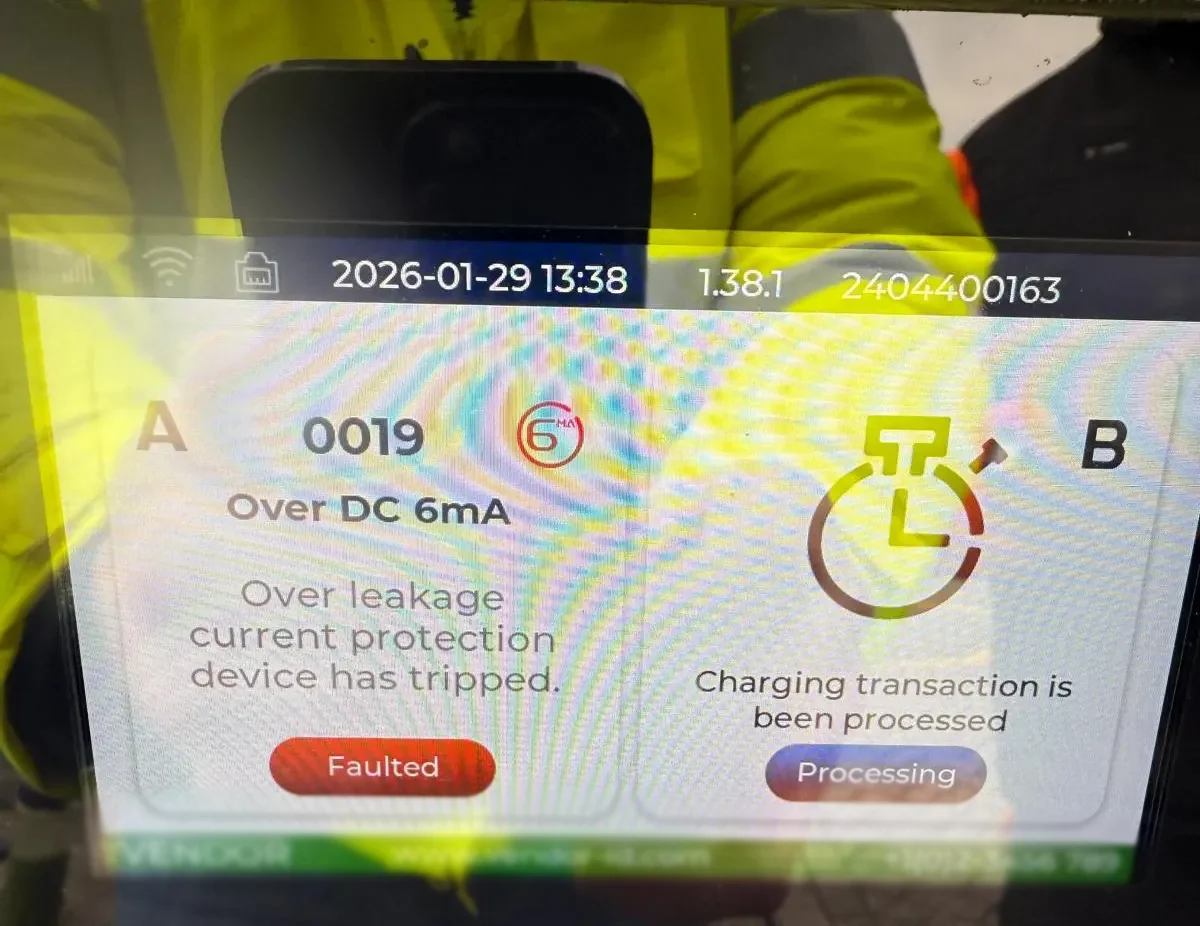
Leakage Current Detection (RCD)
A Residual Current Device (RCD) is a hardware device used to implement residual current protection.
In EV charging applications, RCDs are generally classified according to their sensitivity and type. For example:
30 mA: Commonly used for personnel electric shock protection
Type A: Detects AC residual current and pulsating DC residual current
Type B: Detects AC, pulsating DC, and smooth DC residual current
The appropriate RCD specification should be selected according to the charging application and applicable local safety standards.
Surge Protection
Transient voltage surges are short-duration, high-voltage pulses that can be caused by lightning strikes, grid switching, or the switching of large inductive loads.
Although surges typically last only a few microseconds, repeated transient stress can gradually reduce the service life of semiconductor components or directly cause failure of sensitive control circuits.
Surge Protective Devices (SPDs) inside EV chargers limit transient overvoltage to safer levels, helping protect power electronics and communication modules.
Ground Protection
Grounding provides a safe path for fault current to flow to earth.
Ground protection, also known as protective earth continuity monitoring, continuously checks whether the protective earth connection is intact and whether the ground resistance is low enough to allow fault current to flow safely.
If a broken ground connection or excessively high ground resistance is detected, the charger immediately stops charging to reduce the risk of electric shock caused by exposed metal parts becoming energized.
Fault Recovery
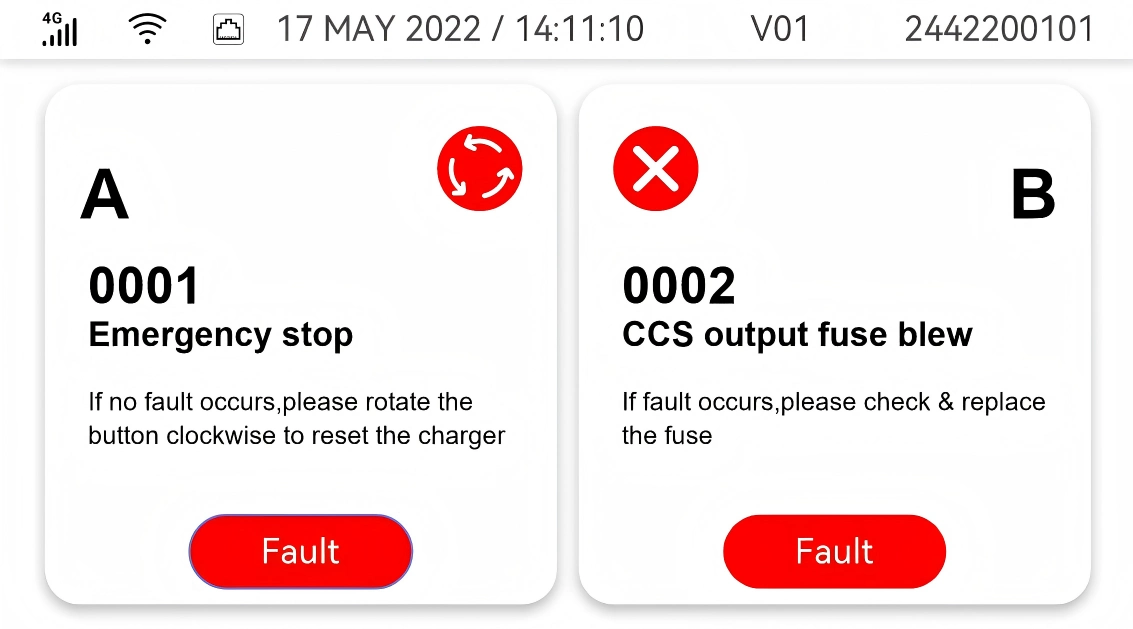
When a fault triggers a protective shutdown, the charger’s control system records the fault type and status for diagnostic purposes.
Not all faults allow automatic recovery. Some faults require manual inspection and reset to confirm that the system is safe before power can be restored.
Over/Under Frequency Protection
Grid frequency is an important indicator of grid stability.
Frequency deviations outside the rated range, such as abnormal frequency variations in systems commonly operating at 50 Hz in Europe or 60 Hz in North America, may affect the charger’s power conversion circuits and indicate broader grid instability.
Over/under frequency protection continuously monitors grid frequency. When the frequency deviation exceeds the specified limits, the system disconnects the charger from the grid to prevent operation under unstable grid conditions.
Over/Under Temperature Protection
Charging generates heat in power electronics, connectors, and cable conductors.
Excessive temperatures can accelerate component aging, shorten the service life of insulation materials, and increase fire risks.
When the temperature exceeds the safe operating range, the system can reduce the charging current and stop charging when necessary.
Under-temperature protection is mainly used in cold-climate applications. When temperatures become too low and may affect vehicle battery performance or charging safety, the system can limit charging or initiate a preheating sequence before charging begins.
ZECONEX EV Charger Protection Features and Advantages
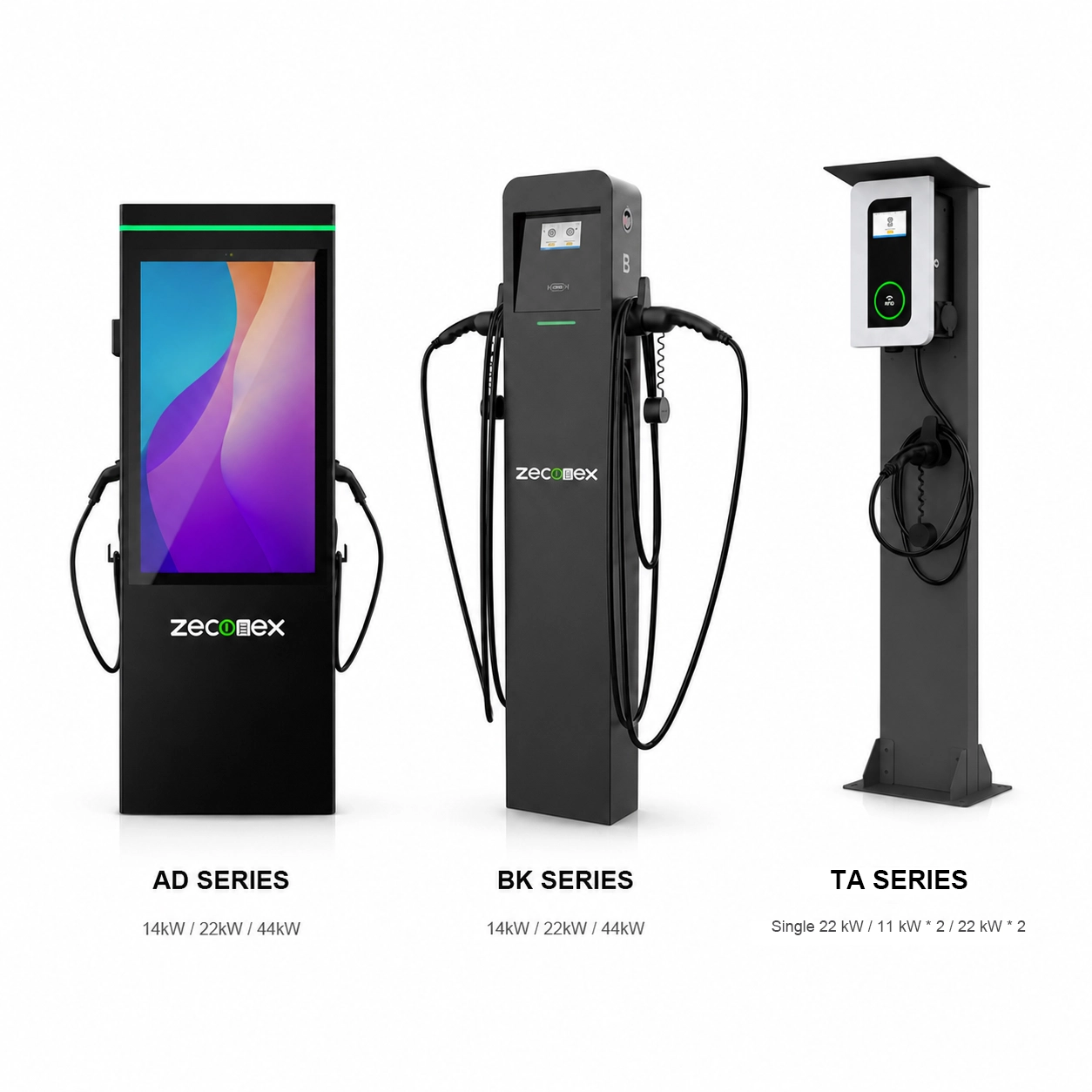
Protection Functions of ZECONEX AC EV Chargers
ZECONEX AC EV chargers integrate a full suite of built-in electrical protection functions aligned with international safety standards and European/North American installation requirements. All specified protection features are factory-calibrated and tested as part of the charger’s integrated safety system.
Standard protection configurations for ZECONEX AC chargers include:
Overcurrent protection
Residual current protection
Ground protection
Surge protection
Over/Under voltage protection
Over/Under frequency protection
Over/Under temperature protection
Short-circuit protection
RCD / RCMU residual-current protection
For the Mix Series Business Wallbox, the protection architecture includes a 30mA Type A AC RCD combined with 6mA DC residual-current detection, addressing both standard AC leakage and DC leakage risks associated with onboard vehicle rectifiers. This configuration meets enhanced commercial charging safety requirements without requiring external RCD upgrades.
Protection Functions of ZECONEX DC EV Chargers
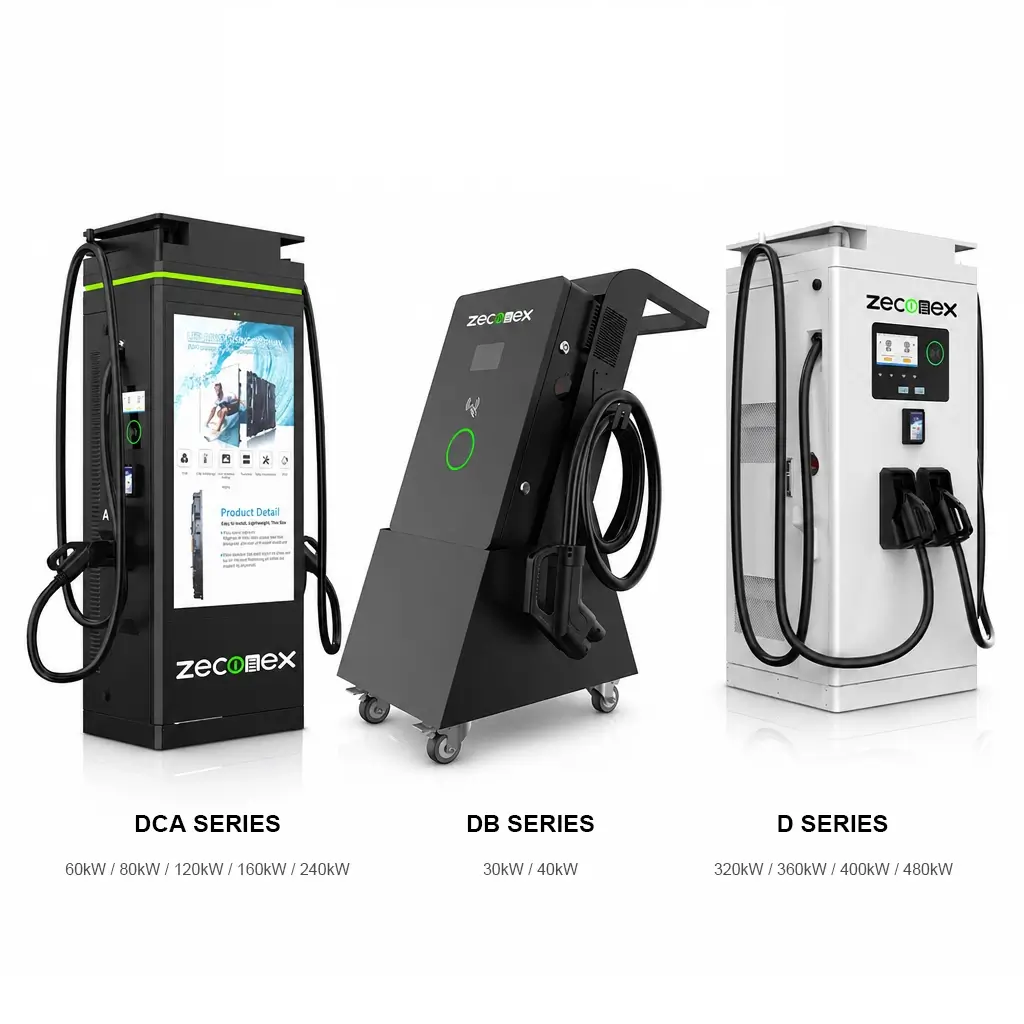
ZECONEX DC EV chargers feature protection configurations tailored to the higher power levels and fault characteristics of DC fast charging. The protection architecture addresses both AC grid input and DC output side risks, with dedicated monitoring for high-power conversion circuits.
Core protection features specified for ZECONEX DC chargers include:
Over/under voltage protection
Overload / overcurrent-related protection
Current leakage protection
Grounding protection
Lightning surge protection
Protection configurations vary across ZECONEX DC charger series to match different power ratings and deployment scenarios. Higher-power DC models incorporate additional thermal monitoring and redundant current sensing for enhanced safety at elevated power levels.